Bar-Stool vs. Counter-Stool: How to Choose High-Acoustic Seating for Dubai Offices
Key Takeaway
Optimizing alternative corporate seating configurations requires selecting physical stool heights that correspond precisely to fixed architectural surface dimensions. Implementing mathematically spaced bar-stools or counter-stools across agile activity-based zones increases impromptu employee collaboration signals while preventing visual clutter and mechanical floor plan crowding.
Introduction
Integrating dynamic, elevated seating configurations within modern corporate office floor plates serves as an effective method for building highly responsive, collaborative business environments. For years, commercial space planning relied almost exclusively on standard task desks and low-profile meeting chairs, which frequently restricted natural workplace movement.
Modern workspace developments require diverse, multi-tiered posture choices to stimulate active communication, break up behavioral monotony, and lower physical fatigue. By mastering the strict dimensional differences between bar-stools and counter-stools, facility executives can specify comfortable, data-backed furniture systems that maximize physical real estate utility across major GCC commercial developments.
What Is an Elevated Seating Configuration?
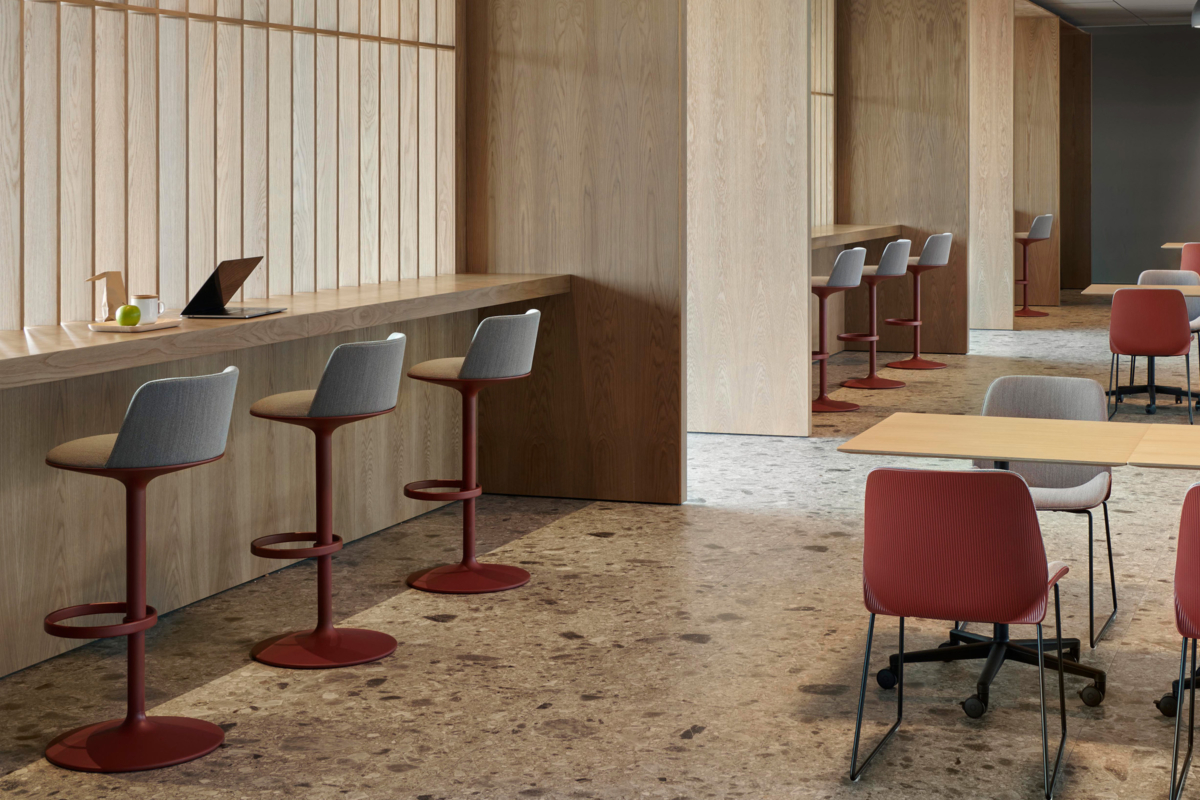
An elevated seating configuration is a spatial layout strategy that implements specialized high-profile chairs and coordinated structural tables—measuring higher than traditional 0.73-meter task desks—to encourage a mixture of standing and seated human interactions throughout the workday.
Instead of forcing employees into rigid, long-duration seating arrangements, this design methodology introduces tall furniture assets into social corporate cafes, open team sprint huddles, and creative presentation zones. These setups allow staff members to alternate easily between active standing postures and casual seated discussions without interrupting the flow of a meeting.
Why Dimensional Workspace Accuracy Matters for UAE Corporate Fit-Outs
Ensuring exact dimensional alignment between custom joinery items and loose furniture assets is essential for organizations working to optimize premium real estate investments in accordance with the Dubai Economic Agenda (D33). As businesses establish modern regional offices across competitive submarkets like the Dubai International Financial Centre (DIFC) and Abu Dhabi Global Market (ADGM), every square meter of a floor plate must serve a functional purpose.
According to commercial interior planning data, procurement errors stemming from mismatched table-and-chair configurations lead to immediate spatial waste and early employee physical discomfort. Prioritizing strict dimensional audits before purchasing commercial furniture ensures a smooth on-site installation and builds fluid, healthy office environments.
Height Specifications: The Vital Technical Distinction
The single most important step in choosing elevated office furniture is measuring the precise vertical clearance from the building floor to the structural underside of your counter surface.
Counter-Stool Dimensions for Semi-Active Tasks
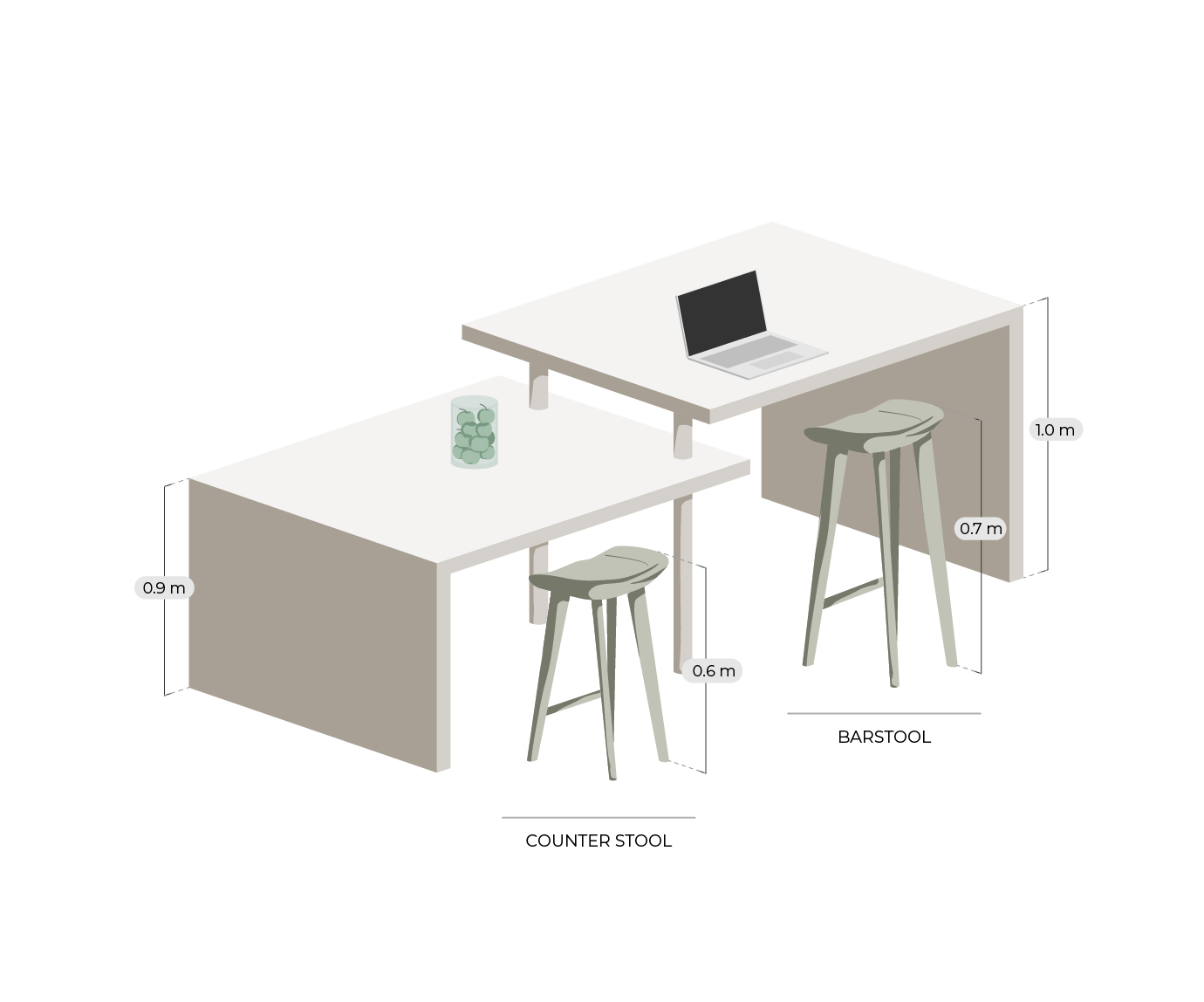
Counter-stools feature an exact seat-to-floor height range of 0.60 meters to 0.70 meters. These premium seating models—such as the elegantly detailed Nuez Stool by Andreu World—are engineered to pair with architectural surfaces and custom countertops that measure between 0.90 meters and 1.00 meter high.
While these surfaces stand higher than traditional writing desks, they provide an approachable height that balances active team discussions with relaxed physical comfort. This dimension works exceptionally well for short-duration laptop data work, informal coffee breaks, and fast project status updates with team members.
Bar-Stool Dimensions for Standing Collaboration
Bar-height stools feature a distinct, taller profile, maintaining an exact seat-to-floor height range of 0.70 meters to 0.80 meters. These taller variants are designed to slide beneath architectural high-top tables and standing-height application bars that measure between 1.00 meter and 1.10 meters from the finished floor line.
This high-profile arrangement creates a lively, energetic atmosphere that naturally complements stand-up design workshops, temporary project reviews, and fast corporate brainstorming sessions. Incorporating true bar-height surfaces across the office gives employees a wide range of posture options, enabling a smooth transition from a seated desk position to a fully standing team discussion.
Width and Spatial Density: More Than Just Numbers
Arranging elevated seating assets across a corporate layout requires calculating exact density spacing parameters to preserve personal elbow room while maintaining a sense of community connection.
-
Allocate Substantive Seating Width Per User: Map out a minimum dedicated horizontal boundary of 0.70 meters to 0.80 meters of space for every single stool to ensure proper adult shoulder clearance.
-
Enforce Clear Safety Clearances Between Units: Maintain a clean physical gap of 0.10 meters to 0.20 meters between adjacent stools to facilitate smooth, unhindered entry and exit movements.
-
Audit the Perimeter Traffic Access Footprint: Leave an unobstructed walkway clear zone behind all high-top tables to accommodate fast-moving office foot traffic.
-
Coordinate Structural Stool Profiles with Room Size: Match the visual weight of your furniture frames with the physical dimensions of the room to prevent visual clutter in compact office wings.
Bar-Stool vs. Counter-Stool: Which Elevated Seating Tier Is Better for Your Layout?
Choosing between bar-height and counter-height furniture setups requires comparing long-term workspace multi-functionality against fixed joinery constraints. Bar-stool configurations pair exclusively with 1.10-meter high-top tables, creating high-energy, active zones that support both fully standing users and seated participants at equal eye level.
Conversely, counter-stool frameworks align with 0.90-meter surfaces, offering a more approachable and comfortable height that supports longer, focused individual laptop work and casual client meetings. While bar-height layouts deliver exceptional flexibility for short, collaborative team workshops, they can cause physical fatigue during extended project planning sessions.
Counter-height seating requires less physical effort to use over multiple hours, but it provides less contrast against traditional desk heights. For modern organizations deploying multi-zone activity-based layouts, conditional recommendations dictate that if your team utilizes the elevated zone primarily for long creative strategy sessions and extended laptop work, then counter-stool seating is superior to a bar-stool configuration.
Exploring the Structural Typologies of Commercial Stool Design
Evaluating alternative physical profiles ensures that selected seating components match specific acoustic, spatial, and functional requirements.
Streamlined Armless and Backless Options
Armless commercial stools occupy a compact physical footprint and offer unhindered lateral entry, making them an excellent choice for maximizing occupant density along shared benches. Similarly, backless models deliver a sleek, minimalist style that allows them to slide fully beneath a counter when not in use. This storage capability minimizes visual clutter, making backless designs highly effective for compact breakrooms and narrow collaboration corridors.
Dynamic Swivel and Adjustable Height Systems
Swivel seating units feature integrated, smooth-rotating mechanisms that allow users to turn toward shifting conversation points effortlessly, making them an effective tool for fast-paced agile team environments. For layouts with varied counter heights, adjustable pneumatic stools serve as a versatile solution. These systems use internal gas cylinders to adjust height ranges instantly, allowing a single stool model to transition from a 0.90-meter counter to a 1.10-meter bar on demand.
Commercial Material Selection and Wear Performance
-
Heavy-Duty Metal Structures: Industrial steel and chrome frame finishes deliver high structural durability and resistance to impact damage, presenting a clean, modern aesthetic.
-
Premium Natural Timbers: Certified solid wood frames provide an elegant look and excellent longevity, bringing biophilic warmth to high-traffic breakout spaces.
-
Low-Maintenance Protected Leathers: Genuine or high-grade synthetic leather seat wraps offer premium aesthetics paired with stain-resistant, wipe-clean maintenance surfaces.
-
Acoustic and Upholstered Options: Fabric-wrapped seat shells upholstered in certified low-VOC textiles—such as the chic Pipo Stool by Dam—add visual color accents while providing slight sound-dampening benefits to open communal hubs.
Common Specification Pitfalls in Elevated Office Seating
The most frequent error corporate buyers commit is purchasing fixed bar-height stools for a custom counter built to counter-height standards, creating an uncomfortably tight clearance zone that prevents users from fitting their legs under the table.
Another common pitfall is placing high-density rows of wide-armed stools along a narrow bench, which leads to overlapping frames and blocks natural employee movement.
Finally, many interior teams specify residential-grade barstools that lack commercial durability ratings, causing rapid mechanical failure and premature frame damage within months of active corporate use.
Best Practices for Executing Elevated Seating Procurement
Securing a comfortable, functional, and durable elevated workspace configuration requires following an ordered, phase-based execution path.
-
Audit All Fixed Joinery and Table Heights: Verify the exact vertical dimensions of all on-site counters with your contractor before finalizing your loose furniture procurement order.
-
Prioritize Certified, Low-Emission Materials: Select stool lines manufactured with eco-certified timber bases and low-VOC fabrics to help meet corporate sustainability benchmarks.
-
Integrate Retractable Seating in Narrow Hubs: Choose backless or armless models for high-traffic walkways so the stools can be tucked away to preserve clear pedestrian paths.
-
Balance Aesthetic Appeal with Everyday Functionality: Pick commercial-grade materials like treated metal or stain-resistant upholstery to guarantee your furniture withstands heavy daily corporate use.
Frequently Asked Questions About Commercial Office Stools
The primary difference lies in the seat height. Counter-stools feature a seat height of 0.60 meters to 0.70 meters designed for 0.90-meter high tables, while bar-stools maintain a taller seat height of 0.70 meters to 0.80 meters tailored for 1.10-meter high surfaces.
To preserve personal comfort and ensure easy physical movement, aim for a horizontal clearance of 0.70 meters to 0.80 meters per user, and leave a clear gap of 0.10 meters to 0.20 meters between adjacent stool frames.
Yes, adjustable pneumatic stools use built-in gas levers or screw mechanisms to adapt across varying height ranges. This flexibility makes them an excellent, low-risk solution for spaces with custom joinery or multi-height work counters.
Backless stools are highly effective because they can be pushed fully under the counter surface when empty. This storage feature keeps walkways clear, reduces visual clutter, and maximizes available space in tight office breakrooms.
Swivel mechanisms allow users to rotate their seats 360 degrees without scraping the stool legs against the floor. This effortless rotation supports natural face-to-face interaction and simplifies entry and exit in busy collaborative environments.
Upholstered seating options combine deep foam cushioning with specialized textile coverings to deliver superior long-term comfort. Sourcing these items from certified brands introduces helpful color styling while reducing ambient noise echo.
Sources
-
Business and Institutional Furniture Manufacturers Association (BIFMA) Ergonomic Guidelines
-
International Organization for Standardization (ISO) Dimensional Standards for Commercial Seating
-
The Total Office Workspace Layout, Ergonomics, and Loose Furniture Specification Logs
Relevant