How Is AI and Immersive Technology Changing the Interior Design and Construction Industry in Dubai?

Key Takeaway
Integrating generative artificial intelligence, Internet of Things (IoT) sensors, and spatial computing interfaces cuts early-stage interior concept creation times by 50%. Commercial layout pipelines that utilize real-time Building Information Modeling (BIM) data and digital twin monitoring consistently prevent expensive on-site reconstruction delays, improving long-term asset management efficiency.
Introduction
The deployment of advanced artificial intelligence (AI) and spatial computing platforms fundamentally reshapes the commercial interior design and construction lifecycle. For a long time, the commercial fit-out sector operated via slow, manual prototyping stages and non-automated project communication paths.
However, modern workspace developments require immediate spatial iteration, absolute logistical visibility, and verifiable eco-compliance signals. By embedding intelligent text-to-image prompt engines, automated building analytics, and immersive simulation hardware directly into project workflows, forward-thinking operators eliminate administrative drag and significantly lower initial construction cost overruns across major regional business hubs.

What Is an AI-Integrated Spatial Design Ecosystem?
An AI-integrated spatial design ecosystem is an interconnected workflow that utilizes machine learning algorithms, cloud-based coordination tools, and immersive data capture devices to conceptualize, construct, and manage physical commercial properties.
Instead of relying on disconnected 2D mood boards and manual site inspection logs, this framework unites all phases of a project under a single data umbrella. Generative algorithms create immediate floor plan options based on programmatic data targets, while interconnected sensor loops feed continuous operational information back into central building networks. This setup provides all project stakeholders with real-time visibility into cost, material safety, and timeline configurations.
Why Do Immersive Technologies Matter for UAE Commercial Projects?
Deploying advanced spatial computing tools is a critical requirement for organizations operating under regional structural and economic mandates like the Dubai Economic Agenda (D33) and the UAE Strategy for Artificial Intelligence. As international organizations establish premium corporate offices in premier commercial developments across the Dubai International Financial Centre (DIFC) and Downtown Abu Dhabi, fit-out speeds must match strict business timelines.
According to regional real estate optimization surveys, utilizing interactive layout platforms enables design teams to finalize conceptual approvals 50% faster than traditional processes. This rapid turnaround allows GCC enterprises to minimize expensive property vacancy durations and accelerate corporate employee onboarding schedules.
The Evolution of Interior Design Frameworks from Concept to Feasibility
The integration of high-performance digital tools reorganizes how creative interior concepts are initialized, cross-referenced, and verified for physical construction.
Concept Acceleration and Rapid Image Generation
Traditional concept planning relied heavily on searching static platforms like Pinterest followed by ordering expensive, time-consuming 3D visualizations that often cost upwards of $1,000 per angle. Modern creative design workflows replace this delay by using advanced generative text-to-image software.
Through precise prompt engineering inputs, interior architects produce multiple photorealistic spatial renderings in minutes. This speed lets design teams present and iterate design paths instantly with clients, slashing initial concept delivery schedules in half while establishing data-backed design frameworks before drafting technical files.
Real-Time Cloud Collaboration via BIM Models
Once a spatial theme is locked in, the architectural data transitions directly to cloud-shared platforms using Building Information Modeling (BIM) applications. This centralized tech structure allows architects, localized MEP engineers, and general interior contractors to collaborate simultaneously on a singular structural blueprint regardless of physical office locations.
The integrated AI systems running within modern BIM platforms automatically detect overlapping structural components, flag potential procurement bottlenecks, and generate predictive scheduling updates to prevent on-site delays.
Structural Feasibility and Spatial Computing Walkthroughs
Verifying on-site feasibility before manufacturing custom furniture pieces requires evaluating corporate floor plans at a true 1:1 human scale. Immersive Virtual Reality (VR) setups allow corporate clients to physically walk through prospective workspaces, check ergonomic sightlines, and reconfigure partition walls on the spot.
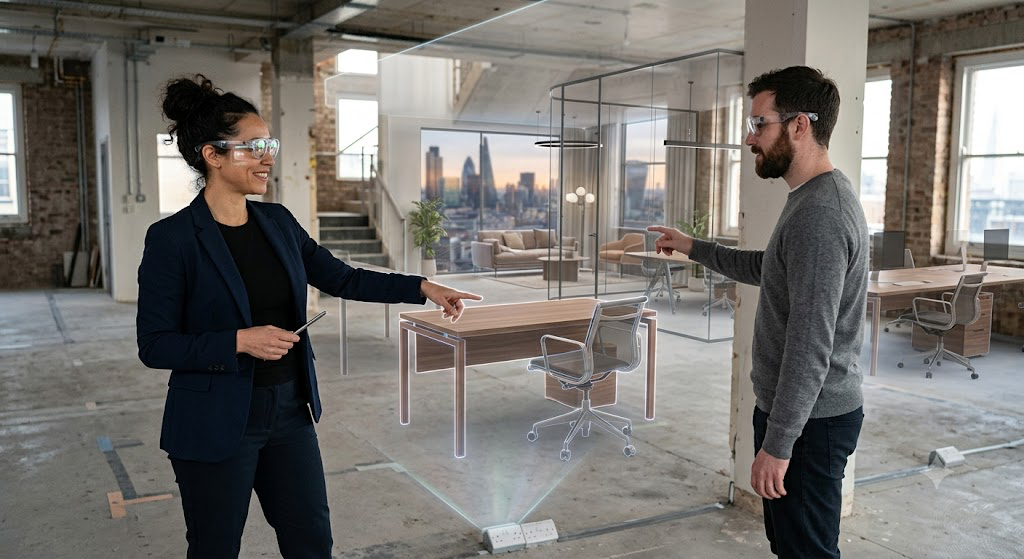
Furthermore, the commercial design sector is moving closer to transparent hands-free spatial computing through active internal development testing of advanced augmented reality (AR) prototypes—such as Meta's Orion glasses. This lightweight form factor projects interactive holographic layout changes directly onto real physical spaces, eliminating the need for expensive post-installation remodeling work.
Traditional Construction Methods vs. Tech-Integrated Project Delivery: Which Is Better?
Choosing a construction methodology for commercial workspaces requires evaluating long-term operational asset control against initial technological training investments. Traditional construction methods rely on manual material tracking, non-automated scheduling logs, and static post-handover facility manuals, which leaves operators exposed to undetected project delays and inaccurate post-occupancy metrics.
Conversely, tech-integrated project delivery merges automated modular building components, 3D printing workflows, blockchain-verified supply chains, and active IoT tracking loops into a unified construction framework. While traditional manual building approaches require zero specialized software training for field teams, they carry high financial risks due to uncoordinated site rework and material provenance errors.
Tech-integrated project workflows require an initial software onboarding period, but they guarantee complete transparency and predictable timeline scheduling. For enterprise operators executing complex corporate real estate rollouts across multiple regional sites, conditional recommendations dictate that if your commercial fit-out involves strict green building targets and multi-tiered shipping lines, then tech-integrated project delivery is superior to traditional construction methods.
Leveraging Technology for Verifiable Corporate Sustainability
Achieving legitimate green building recognition requires moving away from unverified claims and adopting data-backed material analysis tools. Utilizing dedicated digital asset tracking applications ensures corporate transparency from raw sourcing to final on-site installation.
-
Energy Modeling Software: High-performance software platforms calculate prospective lighting, HVAC, and power usage loads during early design phases, enabling architects to modify layouts to minimize long-term building utility costs.
-
Life Cycle Assessment (LCA) Platforms: Digital tracking platforms evaluate the absolute carbon footprint of selected commercial furniture, tracking environmental impacts from initial manufacturing raw material processing down to end-of-use component recycling.
-
Sustainable Material Databases: Interconnected material databases verify product compliance against global environmental frameworks—including Leadership in Energy and Environmental Design (LEED) and WELL Building Standards—to ensure all specified items feature valid, third-party audited green credentials.
Common Implementation Pitfalls in Smart Workspace Technology
The most frequent error commercial facility managers commit is deploying extensive building sensor tracking platforms without linking the incoming data to an active digital twin system, resulting in large amounts of collected facility data that are never used to optimize real-time energy use.
Another common error is failing to establish explicit data compliance protocols for cloud-shared BIM networks, which can lead to version control issues and conflicting structural measurements between different contractors.
Finally, many interior teams choose proprietary tech tools that lack open API connections, creating isolated software systems that increase long-term operational maintenance costs.
Managing Post-Occupancy Reporting via Digital Twin Technology
The operational phase of an optimized corporate office asset requires a systematic, data-rich management strategy to maximize occupant comfort and maintain low building running costs.
-
Deploy Interconnected IoT Building Sensors: Install low-profile ambient environment sensors across office floors to log continuous occupancy patterns, interior air quality indexes, and temperature variances.
-
Construct a Functional Digital Twin Interface: Connect the incoming IoT data streams directly to a virtual 3D replica of the physical office space to build a live facility dashboard.
-
Automate Predictive Facility Maintenance Schedules: Configure the digital twin software to track utility load parameters and automatically alert engineering teams before critical office systems experience hardware failures.
-
Optimize Real-Time Office Resource Efficiency: Link spatial occupancy data to automated building systems to scale down HVAC cooling and turn off light arrays in vacant meeting rooms.
Frequently Asked Questions About Construction Technology
Generative AI lowers design costs by reducing the manual hours needed to create initial concept variations. By using targeted prompt instructions, design software produces photorealistic visual layouts in minutes, replacing expensive and slow manual 3D modeling stages.
A digital twin is a live virtual replica of a physical office environment linked directly to on-site IoT sensors. It enables facility managers to track active energy consumption, monitor indoor air quality, and organize predictive system repairs from a centralized digital interface.
Blockchain technology supports sustainability by creating unchangeable digital logs that trace the complete supply chain path of raw materials. This data allows project managers to verify authentic green certifications—such as FSC and low-VOC standards—while avoiding greenwashing.
Augmented reality glasses like Meta’s Orion allow stakeholders to view 3D digital floor plan changes layered directly on top of real physical office spaces at a 1:1 scale. This interactive preview enables immediate layout corrections before construction starts, preventing expensive site rework.
Yes, energy modeling software helps properties achieve LEED certification by providing predictive data on building power loads. Designers use these insights to optimize lighting and insulation layouts, ensuring the workspace satisfies strict international green building rules.
Cloud-based BIM platforms provide a single, real-time shared workspace for architects, mechanical engineers, and contractors. This unified platform automatically detects layout clashes and design mismatches, reducing communication gaps and keeping project delivery timelines on track.
Sources
-
UAE National Strategy for Artificial Intelligence Development Metrics
-
US Green Building Council (USGBC) Digital Twin & Energy Modeling Guidelines
-
The Total Office Smart Integration Product Specification Archives
Relevant