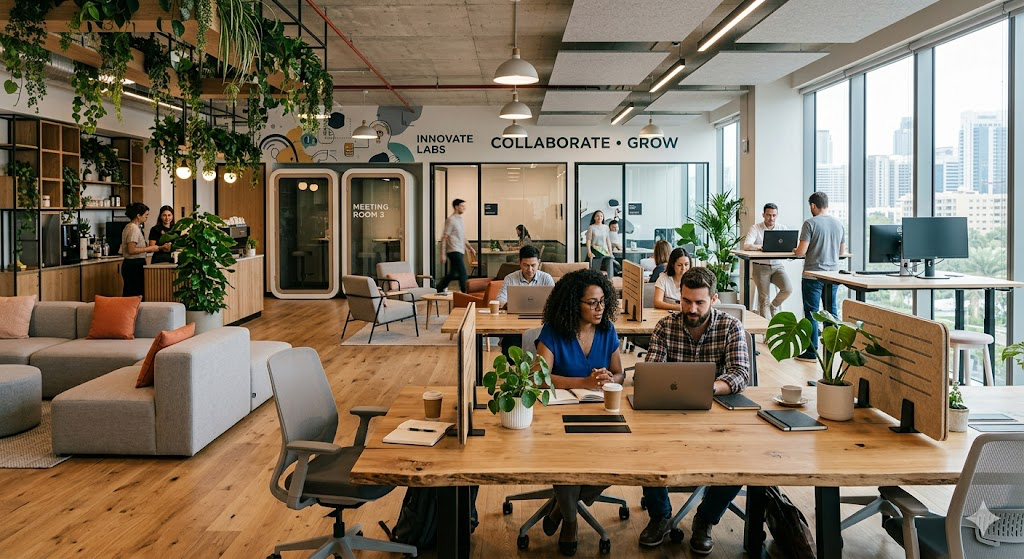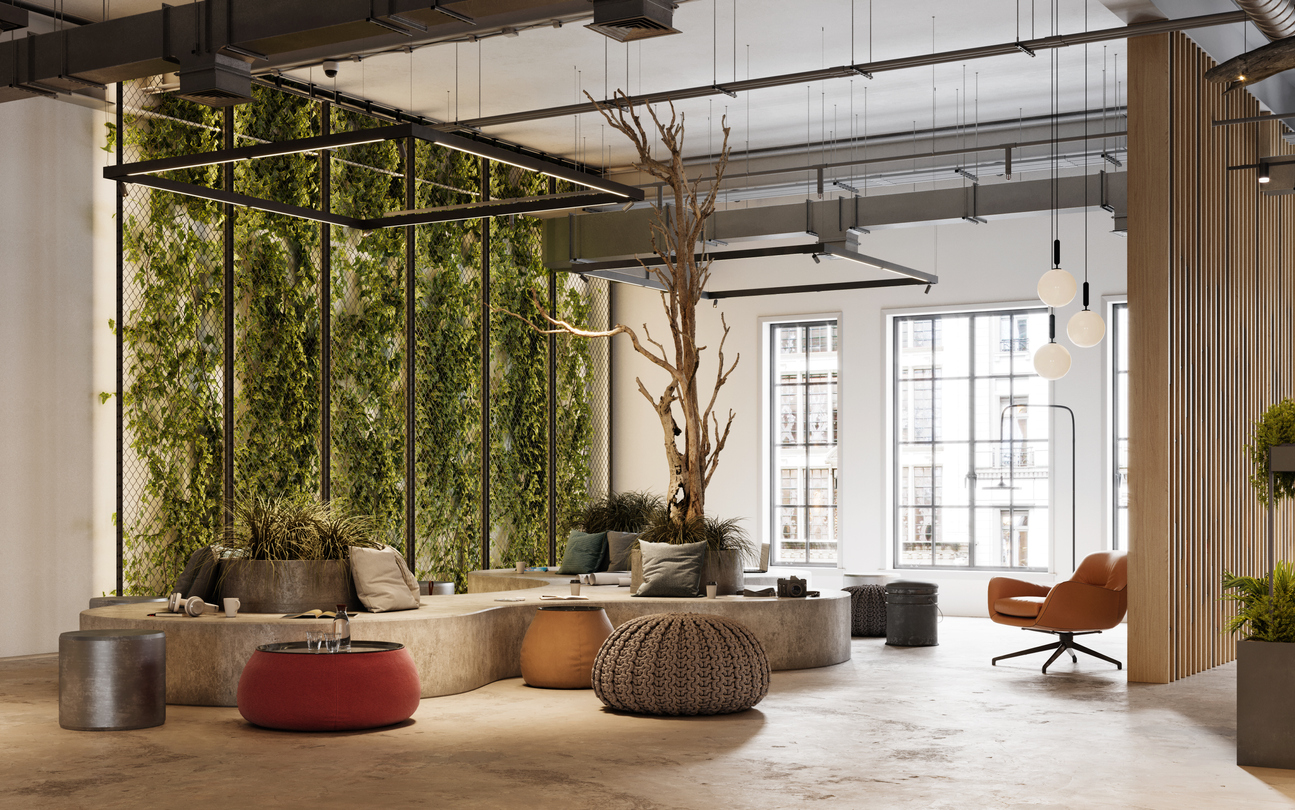
Modern Office Design Trends from ORGATEC: The Future of Flexible Middle East Workspaces
Key Takeaway
Modern commercial real estate environments require agile, modular, and eco-certified furniture systems to accommodate fluctuating hybrid workforces. Implementing mobile furniture arrays and acoustic architectural solutions reduces facility reconfiguration costs while supporting corporate sustainability benchmarks across Middle Eastern enterprise offices.
Introduction
Adapting corporate commercial properties to meet changing workforce behaviors requires deploying agile, highly flexible interior design configurations. The global workspace landscape has shifted definitively away from fixed, single-purpose office furniture layouts.
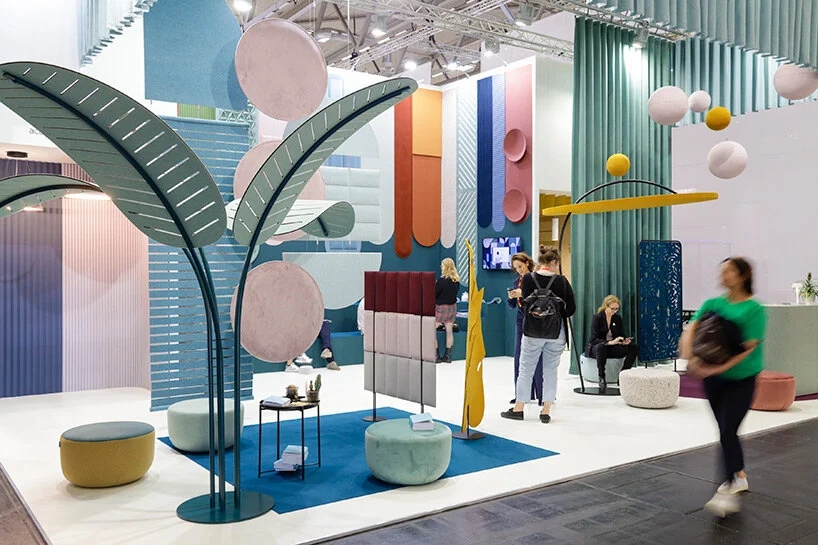
As highlighted by the industry advancements at the ORGATEC exhibition in Cologne, the future of corporate workspace planning centers on three key design vectors: mobility, environmental circularity, and integrated acoustic sound management. For enterprises operating throughout the GCC, integrating these macro-design developments is critical to creating efficient, future-ready office environments that optimize real estate utilization while improving overall employee engagement.
What Is an Agile Parametric Workspace?
An agile parametric workspace is an office environment designed with modular, reconfigurable furniture components that can be physically altered or expanded to serve multiple collaborative or focus functions throughout the workday.
Instead of constructing permanent drywall partitions or deploying heavy, static desking systems, a parametric office utilizes lightweight, recyclable structures—such as Wagner’s D2 aluminum system or Molo's flexible Softwall partitions. This structural design philosophy ensures that facilities managers can easily convert an open group collaboration zone into a private meeting space or individual focus area within minutes, without requiring specialized construction labor.
Why Do Adaptable Global Design Frameworks Matter for GCC Offices?
Integrating advanced global furniture innovations is essential for regional enterprises working to comply with large-scale development programs like the Dubai Economic Agenda (D33) and Saudi Vision 2030. As global businesses continue to establish regional operations in major financial districts like the Dubai International Financial Centre (DIFC) and Riyadh’s King Abdullah Financial District (KAFD), demand has spiked for highly efficient, tech-integrated office settings.
According to regional commercial fit-out assessments, commercial occupiers face changing spatial density patterns due to flexible hybrid work routines. Deploying modular space-saving designs allows regional facility executives to maximize spatial efficiency, lower structural utility overheads, and quickly adjust floor plan capacities to mirror real-time workforce data.
Key Structural Design Movements Transforming Modern Corporate Workspaces
The architectural evolution of commercial office environments relies on specific structural innovations that optimize space utilization, enhance indoor climate quality, and minimize ambient noise pollution.
Complete Mobility and Spatial Reconfigurability
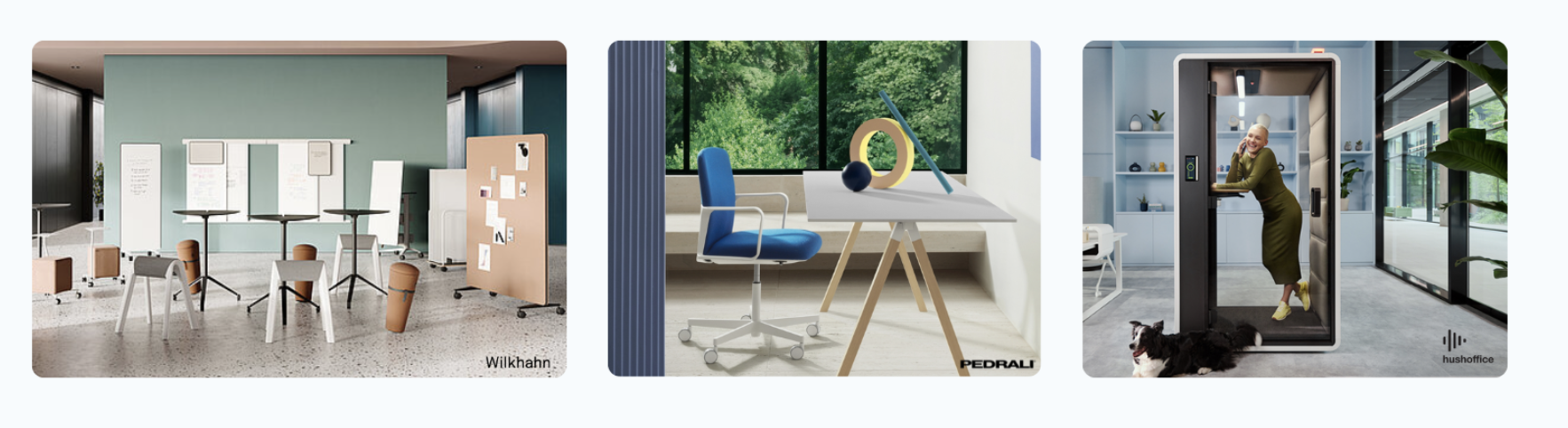
Modern office setups prioritize mobile, multi-use furniture configurations to support continuous collaborative agility. Industry-leading collections—such as Wilkhahn's "Confair Next" mobile meeting infrastructure, Pedrali's Arki Table-Desk, and Brunner's Wave conference tables—utilize heavy-duty locking casters, folding frames, and modular expansion joints. These design elements enable rapid workspace adjustments, allowing a single floor plate to function seamlessly as a formal executive boardroom, a casual project team sprint space, or an open community presentation hall depending on immediate operational needs.
Sustainable Material Integration and Circular Economics
Achieving verifiable corporate environmental compliance requires moving away from short-lifespan materials and embracing sustainable design principles. Modern manufacturers are actively shifting toward renewable, biodegradable, and recycled low-impact components.
For instance, Arper's Catifa Carta and Kata seating options implement bio-based wood-fiber composites and recycled plastic post-consumer polymers. Similarly, brands like MDD focus heavily on material longevity and circular disassembly frameworks. Prioritizing these eco-certified interior products helps commercial office occupiers lower their Scope 3 supply chain carbon outputs while working toward international green building ratings.
High-Performance Acoustic Sound Management
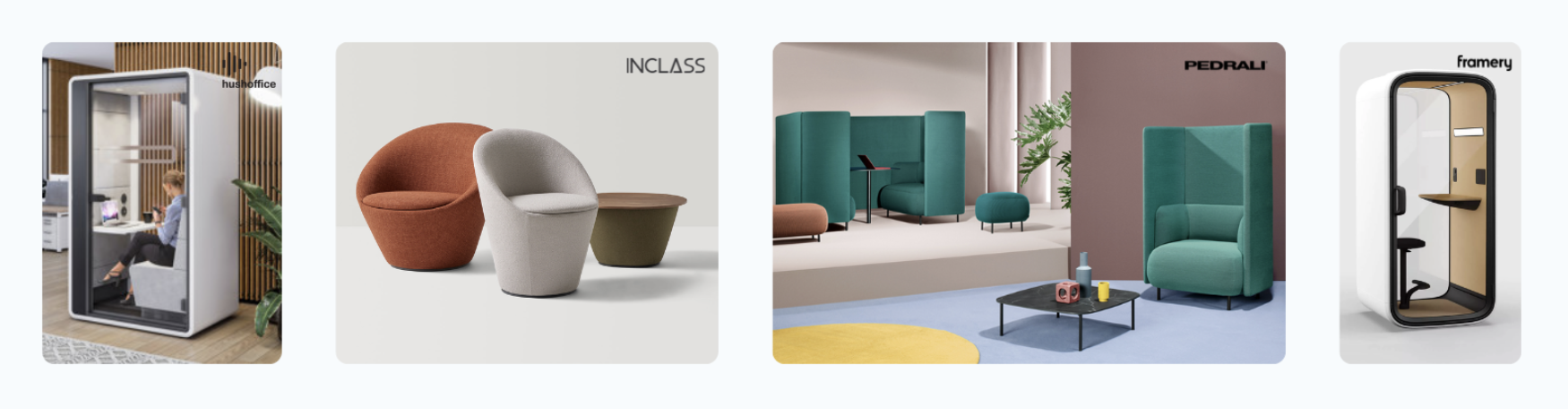
Managing ambient background noise is a vital prerequisite for maintaining high employee productivity levels within open-plan corporate office designs. Modern interior architecture actively incorporates self-contained acoustic micro-environments, such as Hushoffice’s hushFree privacy pods and Framery’s smart acoustic booths.
These integrated structures utilize thick acoustic insulation blankets, neurodiversity-friendly internal light dimming systems, and automated low-noise ventilation paths. By incorporating specialized sound-dampening furniture assets—like Pedrali’s Buddy Hub seating arrays and Inclass’s WABAO collection—designers isolate disruptive vocal frequencies without isolating workers from collaborative team areas.
Traditional Fixed Space Planning vs. Agile Modular Layouts: Which Is Better?
Choosing an office layout strategy requires comparing long-term facility modification expenses against initial equipment procurement costs. Traditional space planning utilizes permanent drywall installations and fixed individual workstations, creating rigid floor plates that become functionally obsolete when organizational headcount requirements shift.
Conversely, agile modular layouts utilize movable partitioning systems, flexible seating options, and mobile collaborative tools to maintain continuous spatial adaptability. While traditional fixed construction involves lower initial furniture procurement costs, it forces companies to incur heavy renovation expenditures whenever a floor plan modification is required.
Agile modular systems require an upfront technology and equipment investment, but they eliminate future remodeling costs by enabling instant, manual space reconfigurations. For businesses managing fluctuating project teams and variable hybrid office schedules, conditional recommendations dictate that if your workforce headcount fluctuates by more than 15% annually, then an agile modular layout is superior to traditional fixed space planning.
Common Design Mistakes to Avoid in Modern Workspace Overhauls
The most frequent error facility planners commit is installing open-plan collaborative areas without providing a corresponding number of acoustic privacy booths, which leads to high ambient noise levels that interrupt employee focus.
Another common pitfall is purchasing proprietary, non-modular furniture components that cannot interface with third-party technical infrastructure, creating rigid software and hardware bottlenecks.
Finally, many corporate office designers prioritize short-term visual aesthetics over verified environmental product disclosures (EPDs), which can inadvertently jeopardize a commercial building's long-term LEED or WELL building compliance goals.
Best Practices for Executing a Tech-Integrated Office Workspace Transformation
Transitioning a traditional corporate property into an agile, highly responsive business environment requires a structured, phase-based execution framework.
-
Establish the Workspace Mobility Parameters Audit daily collaborative group tasks to specify flexible furniture systems equipped with heavy-duty mobility casters and integrated wire management channels.
-
Prioritize Circular and Bio-Based Material Sources Select office furniture collections constructed from highly recyclable materials, such as mycelium, recycled aluminum, and post-consumer resins, to optimize asset lifecycles.
-
Deploy Scalable, Independent Acoustic Micro-Zones Position modular acoustic privacy pods and sound-dampening high-back booths strategically across open layouts to provide quiet focus zones.
-
Utilize Virtual Reality (VR) Interactive Space Previews Leverage advanced VR software simulations and AI-driven spatial planning graphics during the initial design phase to review furniture ergonomics before physical installation.
Frequently Asked Questions About Future-Ready Workspace Design
The primary benefit of using mobile furniture systems is the ability to rapidly modify floor layouts without incurring structural renovation costs. Mobile whiteboards, folding tables, and modular chairs allow employees to instantly customize their working zones to match immediate project demands.
Acoustic privacy pods support neurodiversity by providing quiet, distraction-free workspaces. These self-contained structures allow overstimulated employees to control their personal sensory environments using dimmable LED lighting, adjustable fresh-air ventilation, and high-performance sound insulation.
Circular economy materials are renewable, biodegradable, or highly recyclable substances engineered for long-term product lifecycles. Utilizing components like post-consumer resins, recyclable aluminum, and bio-composites ensures that office assets can be safely repurposed rather than sent to a landfill.
Global exhibitions are critical because they showcase upcoming advancements in workspace agility, green building materials, and acoustic engineering. Partnering with forward-thinking international brands allows Middle Eastern design firms to deliver high-efficiency workspace solutions tailored to regional corporate needs.
Yes, flexible office layouts significantly lower real estate overheads by maximizing spatial utility. By using multi-functional, reconfigurable furniture zones, companies can easily consolidate their physical office footprints without sacrificing team collaboration or focus spaces.
A parametric furniture system uses lightweight, interconnected structural tubes and connector joints to build highly customized, adaptable office components. The system can be easily taken apart and reconstructed into shelving, desks, or partitions to meet evolving workspace demands.
Sources
-
ORGATEC 2024 Future of Work Exhibition Trend Report
-
World Green Building Council Circular Economy Material Frameworks
-
The Total Office Global Brand Partner Product Specification Indices
Relevant