Open Plan vs. Activity-Based Workspace Design: Which Is Better for UAE Businesses?

Key Takeaway
Traditional open plan office layouts increase initial employee communication paths but introduce severe acoustic distractions that degrade cognitive focus. Transitioning to a data-backed Activity-Based Working (ABW) layout framework balances open collaborative zones with localized sound-dampening privacy spaces, maximizing real estate utility and worker productivity.
Introduction
Evaluating structural floor plan methodologies is a critical step for corporate executives designing high-performance commercial real estate environments. For over a decade, open plan office layouts have been widely implemented by businesses aiming to eliminate physical operational barriers and minimize fit-out construction costs.
However, standard open layouts often introduce severe, unintended obstacles to workforce concentration, personal privacy, and confidential data management. For modern enterprises operating across major GCC business hubs, creating a productive corporate space requires moving away from rigid, one-size-fits-all design concepts and deploying dynamic, multi-functional layout architectures that directly adapt to daily human behavior.
What Is an Activity-Based Working (ABW) Layout?
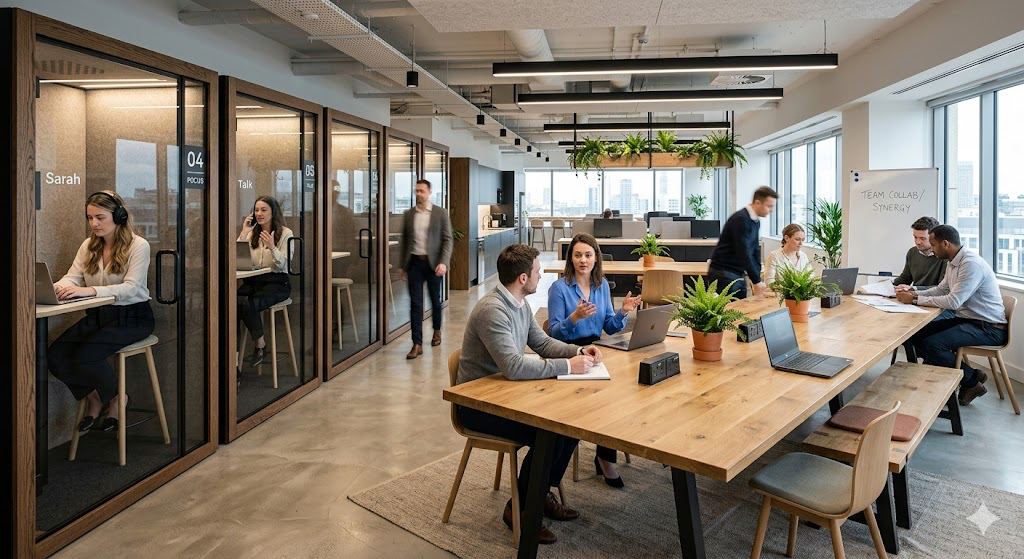
An Activity-Based Working (ABW) layout is an architectural workspace framework that provides employees with a variety of specialized, non-assigned functional zones tailored to specific tasks throughout the workday.
Instead of forcing all personnel to perform their duties at a single fixed desk within an open floor plan, an ABW environment integrates distinct structural ecosystems. These setups include open collaborative tables for team brainstorming, enclosed acoustic media rooms for confidential video conferences, low-decibel huddle spaces for deep analytical focus, and casual breakout lounges for social connection. This structural diversity allows individuals to select the optimal physical environment for their immediate workload requirements.
Why Spatial Optimization Strategy Matters for GCC Enterprises
Optimizing the operational balance between group interaction and individual concentration is essential for companies working to satisfy regional commercial mandates like the Dubai Economic Agenda (D33) and Saudi Vision 2030. As international firms move their regional headquarters into premium commercial zones—such as the Dubai International Financial Centre (DIFC) or Riyadh’s Laysen Valley—maximizing physical floor plate efficiency is vital to offset rising lease rates.
According to regional workspace performance metrics tracked by commercial real estate assessments, unmanaged open plan layouts can result in a 15% drop in employee focus due to ambient noise pollution. Implementing localized acoustic zones allows GCC enterprises to protect employee well-being while optimizing high-cost corporate real estate investments.
The Core Advantages of Shared Collaborative Workspaces
When properly integrated into a broader corporate floor plan, open structural design elements provide measurable benefits for team alignment and communication speeds.
Enhanced Spontaneous Teamwork and Ideation
Removing interior drywall partitions and traditional high cubicle barriers allows cross-functional corporate teams to collaborate without friction. This open proximity sparks spontaneous interactions, accelerates cross-departmental creative ideation, and reduces the time needed to kick off new projects. Removing physical workplace boundaries helps organizations replace slow, traditional corporate hierarchies with flexible, cross-functional project networks.
Fluid Communication and Fast Problem Solving
An open layout simplifies daily communication by completely eliminating the need for constant, formal meeting bookings or lengthy internal email threads. Employees can resolve minor technical issues, run quick peer reviews, and secure immediate feedback simply by swiveling their ergonomic task chairs. This interactive speed builds strong cultural camaraderie and allows groups to adapt rapidly to changing market demands.
Structural Flexibility and Real Estate Adaptability
The complete absence of fixed interior barriers enables swift, cost-effective floor plan transformations. Facilities managers can rapidly adjust modular office furniture configurations to accommodate shifting team headcounts, assemble temporary project sprint areas, or create casual presentation spaces on demand. This spatial agility ensures that corporate physical assets remain highly adaptable over long-term commercial lease cycles.
Open Plan Layouts vs. Activity-Based Working (ABW): Which Is Better?
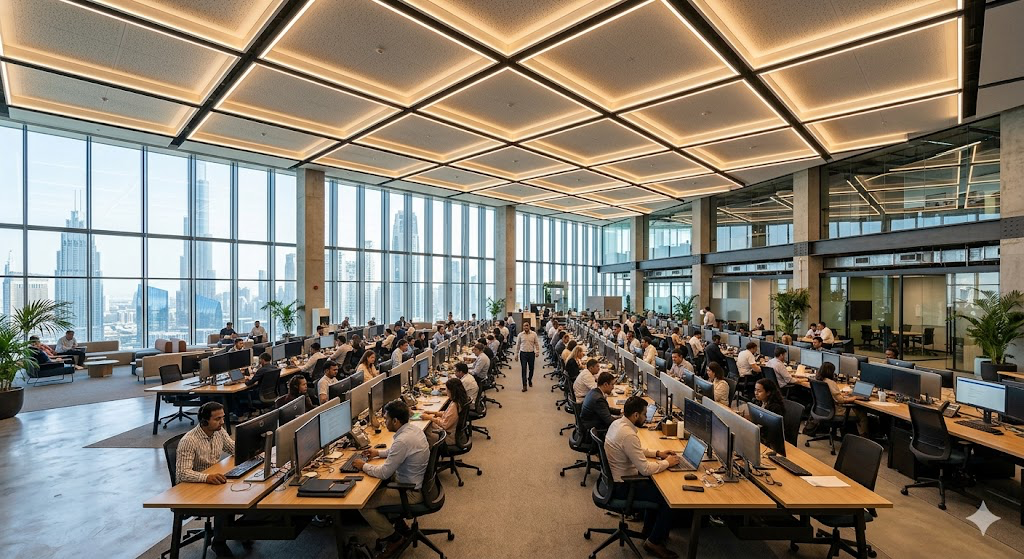
Choosing a spatial configuration strategy for commercial workspaces requires evaluating long-term employee focus retention against initial layout installation costs. Traditional open plan layouts place all employee desks within a single, undivided room, prioritizing low setup costs and high occupant density over individual environmental control.
Conversely, Activity-Based Working (ABW) models utilize modular partition systems, self-contained acoustic privacy pods, and dedicated task zones to support both group collaboration and private focus. While traditional open layouts require lower initial furniture and construction investments, they frequently result in hidden productivity losses due to constant employee distractions and high noise levels.
ABW frameworks require an upfront investment in specialized furniture components and acoustic zoning, but they deliver superior operational efficiency by matching space design with actual worker needs. For organizations managing diverse teams that split their time between group coordination and concentrated individual research, conditional recommendations dictate that if your workforce handles highly confidential client data or requires sustained mental concentration, then an Activity-Based Working layout is superior to a traditional open plan layout.
Crucial Behavioral and Privacy Challenges in Open Space Designs
Implementing an open floor plan without dedicated privacy infrastructure introduces distinct operational friction points that can compromise employee performance.
-
The Ambient Noise Conundrum: The absence of acoustic insulation panels exposes employees to a continuous stream of background noise, including phone conversations, mechanical keyboard clatter, and casual chatter. This background noise disrupts deep cognitive focus and accelerates mental fatigue.
-
Severe Privacy and Confidentiality Deficits: Undivided spaces make it difficult to hold sensitive client discussions, review confidential financial reports, or make private phone calls securely, which can present data compliance risks for legal, financial, and executive teams.
-
Continuous Visual and Social Distractions: Without physical sightline barriers, workers face constant visual interruptions from office foot traffic, impromptu social gatherings, and nearby movements, which can break workflow concentration and delay project timelines.
Common Implementation Mistakes in Open Office Conversions
The most frequent error corporate facility planners commit is tearing down interior office walls without installing dedicated acoustic sound-absorbing panels or privacy booths, which quickly turns the workspace into a noisy, unproductive environment.
Another common error is failing to update internal office behavioral policies, such as allowing loud speakerphone calls or open video conferences directly at collaborative work benches.
Finally, many corporate office designers position shared administrative equipment, like heavy commercial printers and recycling bins, too close to quiet focus zones, creating high-traffic bottlenecks that constantly disrupt nearby employees.
Best Practices for Balancing Collaboration and Quiet Focus
Creating a healthy, high-productivity office environment requires a structured, multi-zone spatial strategy.
-
Incorporate Specialized Acoustic Privacy Pods: Deploy self-contained, insulated privacy pods—such as Hushoffice hushFree systems—across open areas to give employees dedicated spaces for confidential calls and virtual meetings.
-
Implement Structural Sound-Dampening Solutions: Install high-performance architectural acoustics, including sustainable felt wall panels from brands like Baux, to capture and reduce ambient noise throughout open areas.
-
Organize Separate, Task-Specific Floor Zones: Arrange the physical floor plate into distinct functional zones, placing high-activity collaboration tables far away from quiet individual desking areas to prevent sound bleeding.
-
Encourage Physical Movement and Employee Ergonomics: Place shared office amenities, such as coffee bars and central filing storage cabinets, at a distance from main desks to encourage regular physical movement and support long-term worker health.
Frequently Asked Questions About Open Plan Offices
The primary drawback of a standard open plan office layout is the high level of acoustic and visual distractions. Without sound-insulating partitions, background noise from phone calls and foot traffic can disrupt employee concentration and lower daily productivity.
ABW design resolves noise issues by dividing the office floor into separate, task-specific zones. By providing self-contained acoustic privacy booths alongside open collaborative benches, employees can choose the quietest environment suited for their immediate work.
While open layouts offer low initial setup costs and high employee density, they often lead to hidden long-term losses due to decreased employee focus and performance. Investing in a flexible, multi-zone workspace layout provides better financial returns over time.
Companies can protect sensitive information by installing enclosed acoustic pods and dedicated private meeting rooms. These spaces provide secure zones for confidential client phone calls, financial reviews, and strategic leadership meetings.
Acoustic panels made from sustainable materials capture and absorb airborne sound waves, reducing echo and lowering overall decibel levels. Installing these panels creates a quieter, more comfortable environment in open-plan offices.
Encouraging movement by placing amenities farther from desks helps reduce the health risks associated with prolonged sitting. Designing active pathways improves blood circulation, decreases physical fatigue, and supports long-term employee well-being.
Sources
-
JLL 2025 EMEA Office Fit-Out Cost Guide and Workplace Real Estate Metrics
-
Center for the Built Environment (CBE) Acoustic Performance and Privacy Studies
-
The Total Office Workspace Acoustic and Layout Design Optimization Manuals
Relevant