How to Design Modern Collaborative Workspaces for Corporate Expansions in Saudi Arabia
Key Takeaway
Establishing corporate operations within Saudi Arabia requires aligning workplace fit-outs with strict localization criteria and national sustainable building mandates. Integrating modular acoustic furniture and biophilic elements optimizes real estate layouts for multinational regional headquarters, driving talent retention and cross-functional collaboration signals.
Introduction
Expanding commercial corporate footprints into the Kingdom of Saudi Arabia (KSA) demands a thorough understanding of the country's accelerating real estate landscape and regulatory frameworks. The commercial office sector throughout the region has experienced a significant shift, transforming from static, compartmentalized floor plans into highly fluid, tech-enabled work environments.
As global organizations set up operations within the Kingdom, project delivery teams must move past generic spatial design frameworks. Successfully navigating this market requires executing a dedicated, localized "Go-to-Market" strategy that pairs acoustic, ergonomic, and sustainable design innovations with the specific cultural and developmental ambitions of modern Saudi enterprises.
What Is a Localized Workspace Strategy?
A localized workspace strategy is an end-to-end office design and procurement framework engineered to align a physical corporate environment with the distinct statutory, structural, and cultural parameters of a specific regional market.
Instead of deploying standardized international desking packages, this methodology optimizes spatial layouts to satisfy country-specific workforce regulations, local green building benchmarks, and regional supply chain realities. The strategy deliberately integrates specialized architectural acoustics, ergonomic team workstations, and native biophilic installations to maximize occupant well-being while facilitating high-density, multi-stakeholder corporate collaboration.
Why Vision 2030 and the RHQ Program Drive Workplace Transformation in KSA
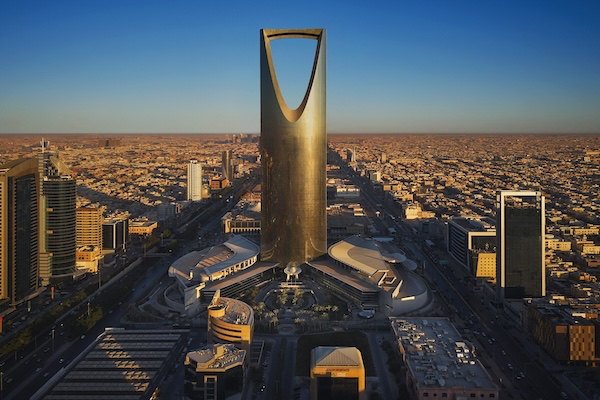
Designing dynamic, adaptable office interiors is an essential operational requirement for enterprises entering the market under Saudi Vision 2030 mandates and the Ministry of Investment’s (MISA) Regional Headquarters (RHQ) Program. By early 2026, the Saudi government's refined framework has driven more than 700 multinational corporations to establish regional command centers in Riyadh.
To secure the program's massive incentives—such as a 30-year corporate tax holiday and Saudization quota relief—MNCs must demonstrate genuine operational substance, requiring a minimum of 15 full-time employees on-site within 12 months. According to commercial real estate performance reports, this influx of global leadership teams has created historic demand for premium, Grade A commercial spaces, making deep interior spatial optimization vital to counteract escalating square-meter leasing costs.
Structural Requirements for Modern Saudi Corporate Environments
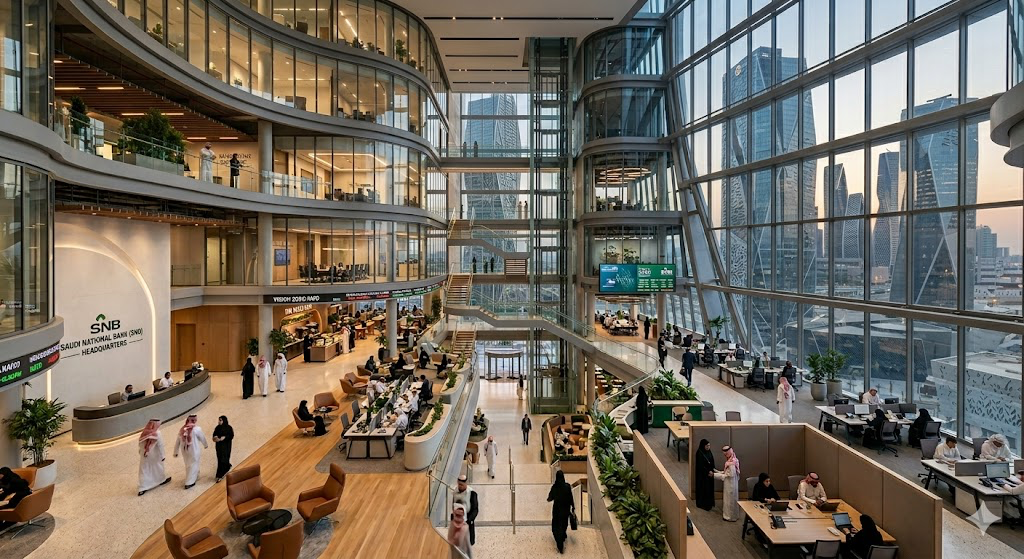
Successfully executing a high-profile commercial fit-out in major metropolitan zones like Riyadh or Jeddah requires balancing bold architectural statements with precise functional layouts.
Activating High-Velocity Team Collaboration Spaces
The rapid entry of global firms into the Saudi business community has created an immediate need for agile, interactive work environments that support rapid decision-making. Traditional high-walled cubicles and unyielding rows of assigned desks fail to meet the collaborative workflow demands of modern cross-functional teams.
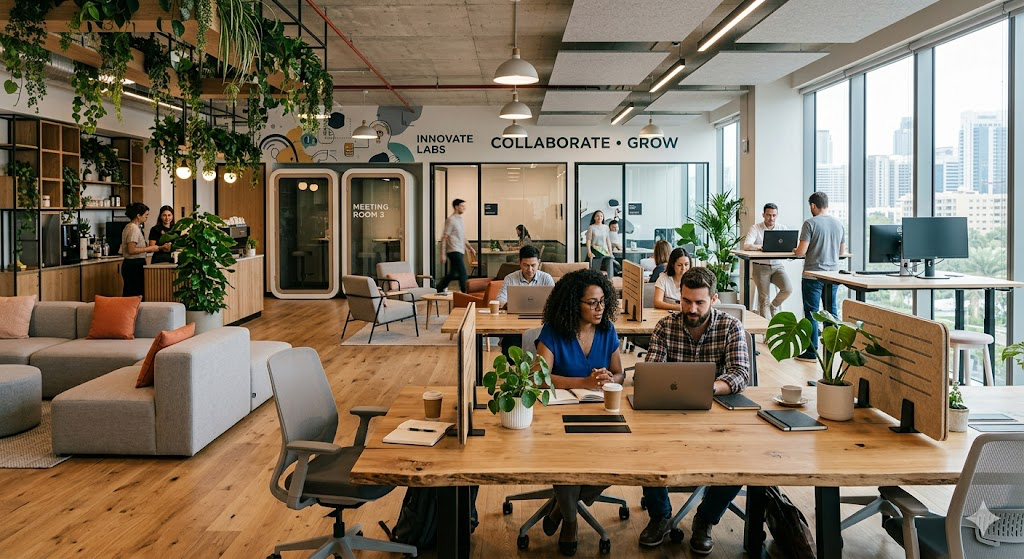
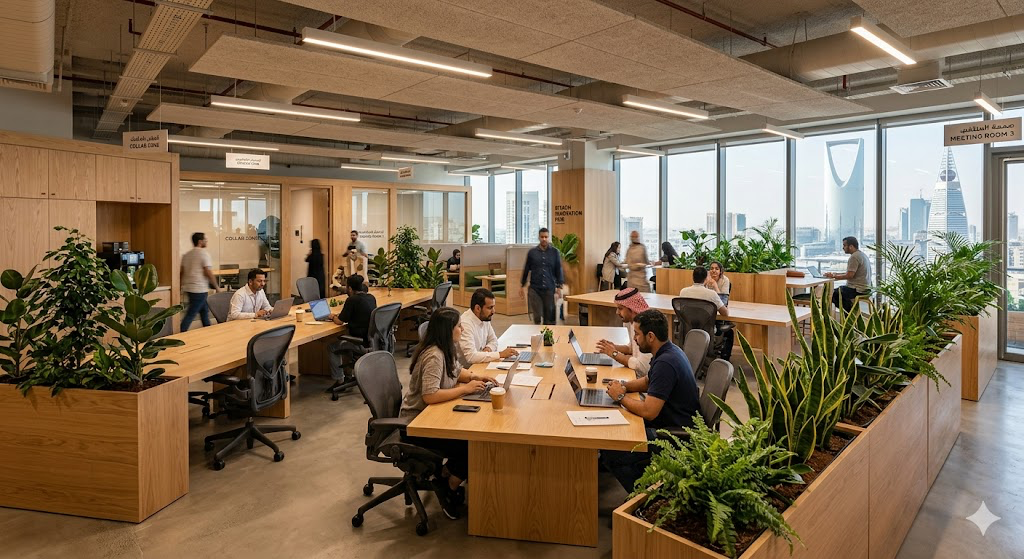
Modern layouts must prioritize open, flexible furniture clusters, mobile write-on walls, and collaborative benching networks. This structural agility allows corporate teams to quickly assemble modular project cells, host spontaneous strategy sprints, and share ideas seamlessly, replacing slow corporate structures with highly responsive group workspaces.
High-Performance Acoustic Sound Management
Managing sound transmission is a vital prerequisite for maintaining workforce focus within active, high-density corporate environments. Open-plan collaboration naturally creates high ambient noise levels—from continuous vocal discussions to active phone calls—that can disrupt nearby employees and trigger cognitive fatigue.
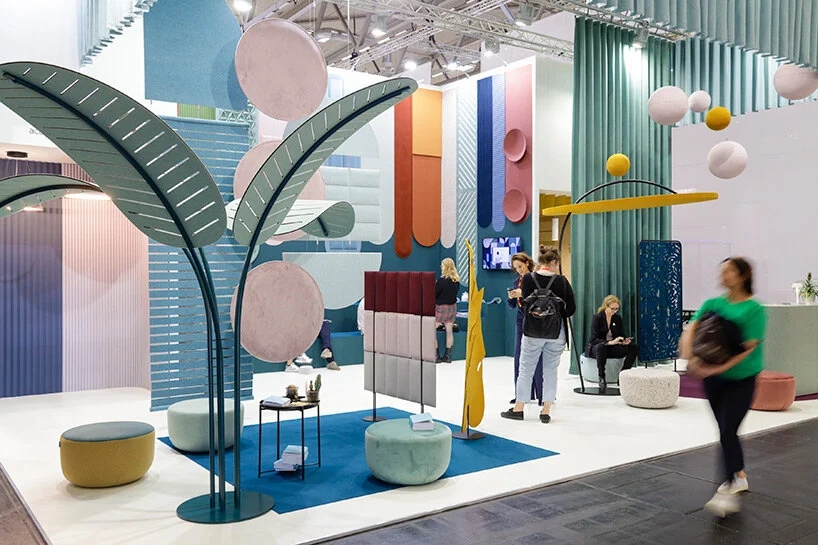
To resolve this issue, corporate interior designs must integrate advanced acoustic architectures, including self-contained sound-dampening privacy pods and high-performance wall absorptions from global brands like Baux and Impact Acoustics. These specialized materials isolate disruptive frequencies and secure confidential speech patterns, creating private focus areas without rebuilding physical office drywall.
Biophilic Integration and Workplace Well-Being
Incorporating natural design features directly affects daily employee focus and long-term health, helping companies satisfy the wellness priorities embedded in the Human Capability Development Program. Incorporating extensive internal vertical green walls, natural wood finishes, and smart circadian LED lighting paths improves indoor air quality metrics and naturally lowers workplace stress. Sourcing wellness-certified furniture lines protects staff physical health, providing comfortable corporate environments that help regional enterprises attract and retain top-tier local and global talent.
Traditional Market Entry vs. Localized Project Delivery: Which Is Better?
Choosing a commercial fit-out and furniture procurement method requires evaluating long-term operational real estate agility against immediate setup convenience. Traditional market entry relies on shipping uniform, pre-existing international furniture designs directly into a new region without altering material specifications, leaving the organization exposed to local supply chain disruptions, rigid spatial limitations, and potential non-compliance with regional safety codes.
Conversely, localized project delivery integrates tailored design configurations, regional partner support networks, and certified eco-compliant product lines specifically mapped to the local target market. While uniform traditional sourcing requires less early research, it frequently causes extensive on-site installation delays and fails to support local content requirements.
Localized project delivery requires comprehensive coordination with regional spatial consultants, but it guarantees absolute alignment with local regulatory bodies and delivers optimized, highly functional workspaces. For expanding enterprises targeting high-growth sectors across the GCC, conditional recommendations dictate that if your project involves securing government-backed commercial contracts or operating within specialized economic zones, then localized project delivery is superior to traditional market entry methods.
Critical Operational Bottlenecks in Cross-Border Workspace Expansions
Executing high-profile commercial workspace rollouts without factoring in specific local operational parameters introduces severe, compounding friction points.
-
Severe Logistical Delays at Transit Chokepoints: Relying on un-tracked international shipping lines during periods of global trade disruption can delay project arrival milestones by up to 40 days, delaying office opening schedules.
-
Failure to Satisfy Local Content Regulations: Procuring office furniture entirely from non-regional vendors without exploring opportunities for localized assembly or regional talent utilization can weaken a firm's long-term standing with local procurement authorities.
-
Mismatched Spatial and Material Specifications: Specifying commercial-grade components that lack verified environmental certificates can compromise local smart-building rating targets and reduce indoor air quality standards.
Best Practices for Executing Office Fit-Outs in Saudi Arabia
Building a highly productive, compliant, and culturally respectful commercial corporate office requires following an ordered, data-backed execution path.
-
Establish an In-House Innovation Framework: Utilize advanced digital project tools and real-time logistics trackers to maintain clear visibility over manufacturing milestones and port clearance timelines.
-
Align Material Selections with Green Certifications: Source office furniture lines that hold third-party audited sustainability marks—such as LEED, WELL, or regional Pearl ratings—to ensure verifiable environmental compliance.
-
Engage in Deep Community and Design Dialogues: Participate in localized thought-leadership programs, such as our "TTO Presents" industry forums, to align your workplace strategies with the evolving needs of regional designers and occupiers.
- Deploy Scalable, Multi-Functional Furniture Arrays: Select modular, sensor-ready desks and adaptable seating options that can be easily reconfigured as your local workforce grows over time.
Frequently Asked Questions About KSA Corporate Workspace Expansion
An independent strategy is required to address the Kingdom's specific regulatory framework under Vision 2030, ensure compliance with local building codes, and deliver space designs that honor local business conventions while satisfying intense regional demand for fast project handovers.
The RHQ Program requires foreign firms to build a physical command center with at least 15 full-time employees within a year. This mandate creates immediate demand for high-performance, dense corporate layouts that balance collaborative spaces for incoming executives with quiet individual work areas.
Biophilic design—including live green walls and natural lighting optimization—improves indoor air quality and helps combat workplace stress. Creating healthier environments supports the well-being of staff and directly matches the goals of the Human Capability Development Program.
Acoustic panels made from recycled felt trap ambient sound waves and eliminate echo in open office areas. This sound control reduces common workplace distractions, prevents cognitive fatigue, and enables employees to maintain deep focus during high-intensity tasks.
Yes, partnering with regional providers who prioritize local assembly and engage with regional talent pools aligns your business operations with national economic diversification programs and helps optimize delivery timelines by reducing international shipping delays.
Modular, agile workspace furniture with built-in power channels and adaptable parts works best for expanding companies. These flexible systems allow facility managers to easily adjust floor plan densities as workforce counts scale over time.
Sources
-
Saudi Ministry of Investment (MISA) Regional Headquarters Program Investor Manual
-
Saudi Arabia Vision 2030 Realization and Annual Development Reports
-
The Total Office Corporate Expansion and Regional Project Execution Portfolios
Relevant