How to Integrate Corporate Brand Identity into Commercial Office Interiors

Key Takeaway
Integrating corporate brand assets into physical office interiors transforms standard workstations into immersive representations of an organization's cultural values. Coordinating strategic color palettes with high-performance furniture assets establishes visual brand alignment while supporting on-site employee well-being and operational performance signals.
Introduction
Developing a corporate office interior that effectively mirrors an organization's baseline brand philosophy requires a careful balance of corporate identity and functional spatial design. For a long time, commercial office design treated brand placement as a simple task, often limited to mounting a static corporate logo behind a primary reception desk.
However, modern workspace developments require an end-to-end immersion strategy, ensuring that a brand's core values are felt throughout the physical space. By blending custom material textures, strategic color psychology, and advanced modular furniture configurations, workplace designers convert standard office layouts into active, physical stories that communicate trust to corporate clients and unite teams under a shared organizational purpose.
What Is Brand-Integrated Interior Design?
Brand-integrated interior design is a comprehensive space-planning framework that embeds an organization's visual graphics, cultural mission, and operational values directly into the physical materials, colors, and layout architecture of its commercial property.
Instead of treating interior finishes as isolated styling details, this methodology handles the physical environment as a non-verbal communication tool. Every design choice—from specified textile finishes on ergonomic task seating to the openness of the corporate floor plate—is intentionally selected to reinforce corporate messaging and establish a unified, recognizable environment for staff and visitors alike.
Why Physical Brand Alignment Matters for UAE Enterprises
Reflecting brand values within your office layout is a critical requirement for businesses operating under national development initiatives like the Dubai Economic Agenda (D33) and Saudi Vision 2030. As international organizations build out regional headquarters across prime commercial sectors—including the Dubai International Financial Centre (DIFC) and Riyadh's King Abdullah Financial District (KAFD)—the design quality of physical properties serves as a major indicator of corporate credibility.
According to regional commercial real estate performance audits, enterprises that construct cohesive, brand-aligned workspaces see a distinct rise in workforce engagement and client trust signals. Prioritizing clear brand positioning within physical layouts allows GCC firms to stand out in competitive markets while satisfying global corporate compliance metrics.
The Psychology of Color Architecture in Corporate Settings
Using strategic color coordination across commercial property walls, task seating, and common breakout zones establishes a reliable foundation for on-site brand recognition.
Defining the Corporate Character via Tint Matrices
Color serves as a powerful, non-verbal communication layer that directly influences user mood and brand memory metrics. Selecting a unified on-site color palette that coordinates with an organization's visual guidelines creates a professional, memorable environment.
For example, high-velocity creative agencies often integrate energetic orange or vibrant red tones into accent furniture pieces to symbolize creative focus. Conversely, long-standing financial groups or legal consultancies typically select deep blues, muted grays, and refined neutral schemes to project institutional reliability, corporate authority, and quiet professionalism.
Building Workplace Consistency and Cultural Purpose
Spreading specific accent colors evenly across separate corporate spaces—including collaboration tables, casual cafeterias, and enclosed training rooms—strengthens overall brand identity. This consistent design detail creates an underlying sense of unity and operational purpose across separate departments. Waving brand colors into physical workspace textures lets businesses move beyond basic interior decoration to create an immersive, branded experience.
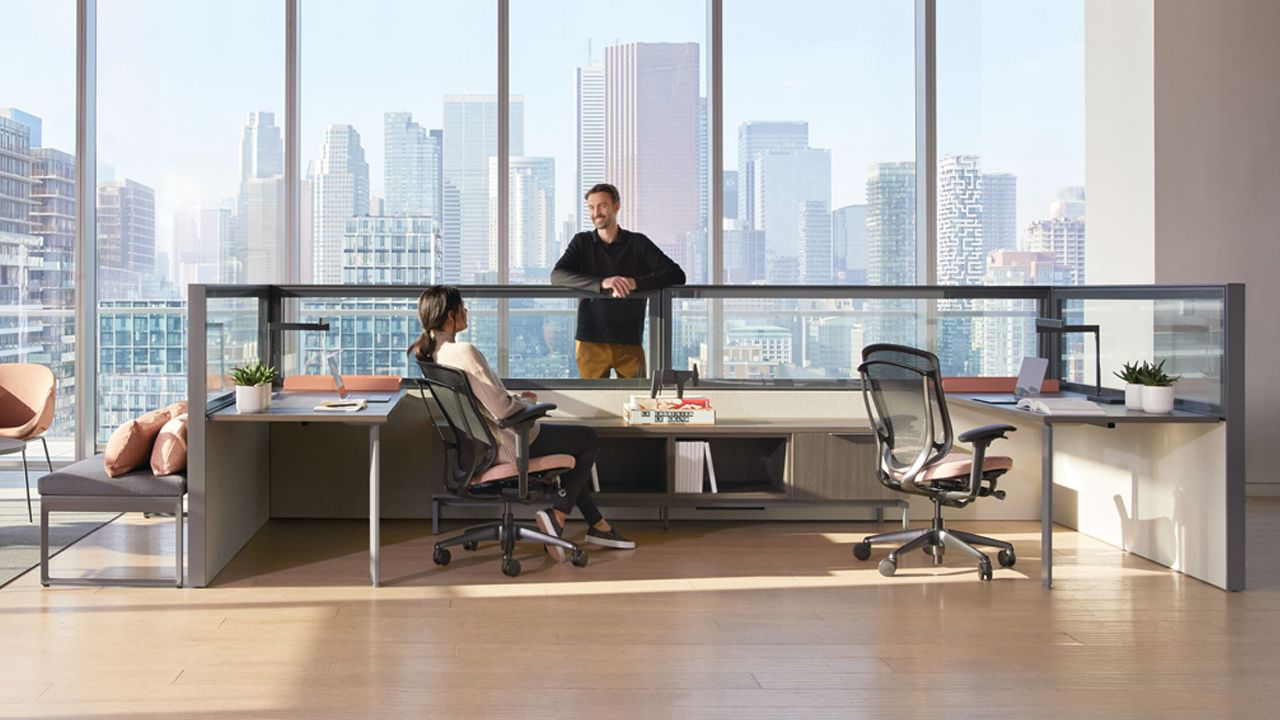
Specifying Commercial Furniture Assets as Brand Ambassadors
Selecting premium commercial furniture pieces allows facility managers to express high-level corporate values through physical comfort, material innovation, and structural utility.
Expressing Innovation via Parametric Desking
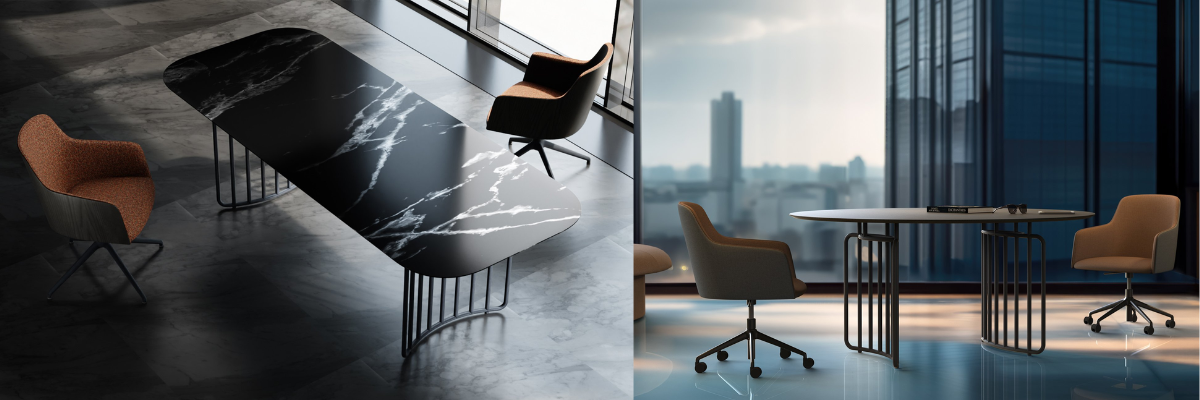
Modern corporate furniture options communicate an organization's respect for operational efficiency and worker independence. For instance, implementing sleek desking systems—such as the Radius Table by B&T Design—projects a forward-thinking, adaptable business personality. The clean design lines and flexible connectivity channels tell clients that the firm prioritizes modern technical processes and values fluid workplace layouts over rigid, non-adaptable desking arrays.
Demonstrating Employee Well-Being via Privacy Architecture
Providing specialized acoustic retreat environments shows that an organization is explicitly dedicated to employee mental wellness and personal space. Integrating modular acoustic hubs—such as the Orangebox Campers & Dens pod architecture—serves as a clear statement of employee care.
Featuring an internationally patented opening roof system and flexible space options, these relocatable systems show that corporate management respects individual focus and confidentiality as much as group collaboration. This design balance appeals directly to companies that value workplace health, environmental safety, and diverse work environments.
Projecting Luxury and Circular Economy Standards
Sourcing high-end, eco-certified seating options—such as the Gala Pure Eco chair by Andreu World—allows businesses to showcase luxury aesthetics alongside a clear commitment to environmental sustainability. Designed by Piergiorgio Cazzaniga using advanced 100% recycled and recyclable Pure ECO® thermopolymers, these stackable armchairs deliver clean lines, excellent structural durability, and a verifiable circular life cycle. Placing these certified pieces across high-prestige executive boardrooms demonstrates an authentic commitment to environmental stewardship and premium manufacturing quality.
Open Floor Plates vs. Structured Traditional Layouts: Which Brand Position Is Better?
Choosing a corporate office layout strategy requires comparing an organization's collaborative communication goals against its regulatory confidentiality requirements. An open floor plate removes all permanent drywall barriers to prioritize rapid interpersonal interaction, high visual transparency, and an agile team hierarchy, making it an effective choice for fast-growing technology groups and creative media networks that want to project a culture of constant adaptation.
Conversely, a structured traditional office layout utilizes enclosed executive spaces, dedicated department quadrants, and quiet focus wings to protect employee concentration, ensure personal acoustic privacy, and safeguard sensitive data management. While open plans feature lower construction fit-out costs, they can expose workers to constant visual and acoustic distractions.
Traditional structures require higher upfront drywall partitioning and layout costs, but they provide clean spatial order for organizations handling confidential client records, such as international legal practices or corporate banking firms. For business groups establishing regional corporate locations, conditional recommendations dictate that if your brand positioning relies heavily on handling highly confidential client transactions or demands deep individual data analysis, then a structured traditional layout is superior to an open floor plate design.
Turning Structural Feature Walls into Immersive Brand Displays
Using vertical accent walls across key client reception areas or high-traffic gathering hubs provides a large canvas to highlight corporate values.
-
Deploy Natural Moss Material Walls: Install biophilic moss feature arrays to bring a touch of nature indoors, showing a clear connection to sustainable building practices and eco-friendly operations.
-
Integrate Advanced Acoustic Art Panels: Mount high-performance, color-matched acoustic panel fabrics to lower ambient echo levels, demonstrating a clear focus on workplace comfort.
-
Apply High-Density Graphic Decals: Use clean, custom typography elements or motivational core value statements to remind staff and visitors of the firm's long-term business goals.
-
Coordinate Ambient Architectural LED Backlighting: Position soft, concealed LED strip lights around your feature wall materials to create a premium, three-dimensional look that captures attention.
Common Pitfalls to Avoid in Brand-Integrated Workspace Design
The most frequent error corporate facility planners commit is copy-pasting a brand's digital logo colors directly onto large office walls without adjusting the color codes for ambient interior lighting, creating over-saturated spaces that cause visual strain and fatigue.
Another common error is purchasing cheap, short-lifespan furniture items that lack third-party green certifications, which can undermine a company's public commitment to corporate social responsibility.
Finally, many interior teams design open collaborative spaces without providing matching acoustic privacy pods, leading to high noise levels that compromise data privacy and interrupt employee focus.
Frequently Asked Questions About Branded Office Design
Color psychology works by triggering specific emotions and associations when clients enter a space. Using deep blue tones conveys corporate reliability and professional authority, while bright accent colors like orange highlight a company's focus on innovation and collaborative energy.
The primary benefit of Orangebox Campers & Dens is the ability to provide flexible acoustic privacy within open-plan offices without constructing permanent drywall partitions. These mobile pod systems can be easily moved, rearranged, or refreshed to support changing workspace layouts.
The Gala Pure Eco chair supports sustainability targets by utilizing 100% recycled and completely recyclable Pure ECO® thermopolymers. Choosing these third-party verified materials allows companies to lower their Scope 3 supply chain carbon inputs and meet global circular design standards.
Yes, a traditional structured layout can highlight innovation by integrating sleek, tech-integrated furniture, bold accent pieces, and customized feature walls. This combination preserves the quiet focus and acoustic privacy required for deep analytical tasks while expressing modern brand style.
Sustainable feature walls perform best when built using natural preserved moss panels, low-VOC timber trims, and recycled acoustic felt sheets. These eco-friendly choices clean indoor air metrics, trap distracting ambient noise, and provide a clear visual sign of green corporate values.
Low-cost furniture often lacks essential ergonomic features and breaks down quickly under heavy use, which can reflect poorly on a brand's commitment to quality. Investing in commercial-grade, certified furniture ensures long-term asset performance and protects team physical health.
Sources
-
Human Factors and Ergonomics Society Commercial Property Wellness Metrics
-
BIFMA LEVEL and Pure ECO® Thermopolymer Environmental Testing Data
-
The Total Office Corporate Branding and Interior Space Planning Archives
Relevant