How to Choose the Best Writable Walls for Collaborative Dubai Workspaces
Key Takeaway
Integrating architectural writable surfaces—such as premium magnetic glass boards, dry-erase paints, and agile mobile dividers—increases workspace collaboration signals and mental ideation velocity. Maximizing spatial utility requires balancing text readability and wall surface flexibility against long-term facility maintenance costs.
Introduction
Developing an active, high-performance brainstorming environment within modern corporate offices depends heavily on providing continuous canvases for collaborative thought. From initial childhood learning environments to executive corporate boardrooms, writable vertical surfaces serve as essential tools for capturing spontaneous strategies, mapping complex workflows, and visualizing abstract design concepts.
However, modern workspace developments require moving past standard, non-adaptable wall setups. By matching precise spatial layouts with advanced write-on materials, facility managers can eliminate structural barriers, maximize team interaction, and build agile work environments across the GCC.
What Is an Architectural Writable Canvas?
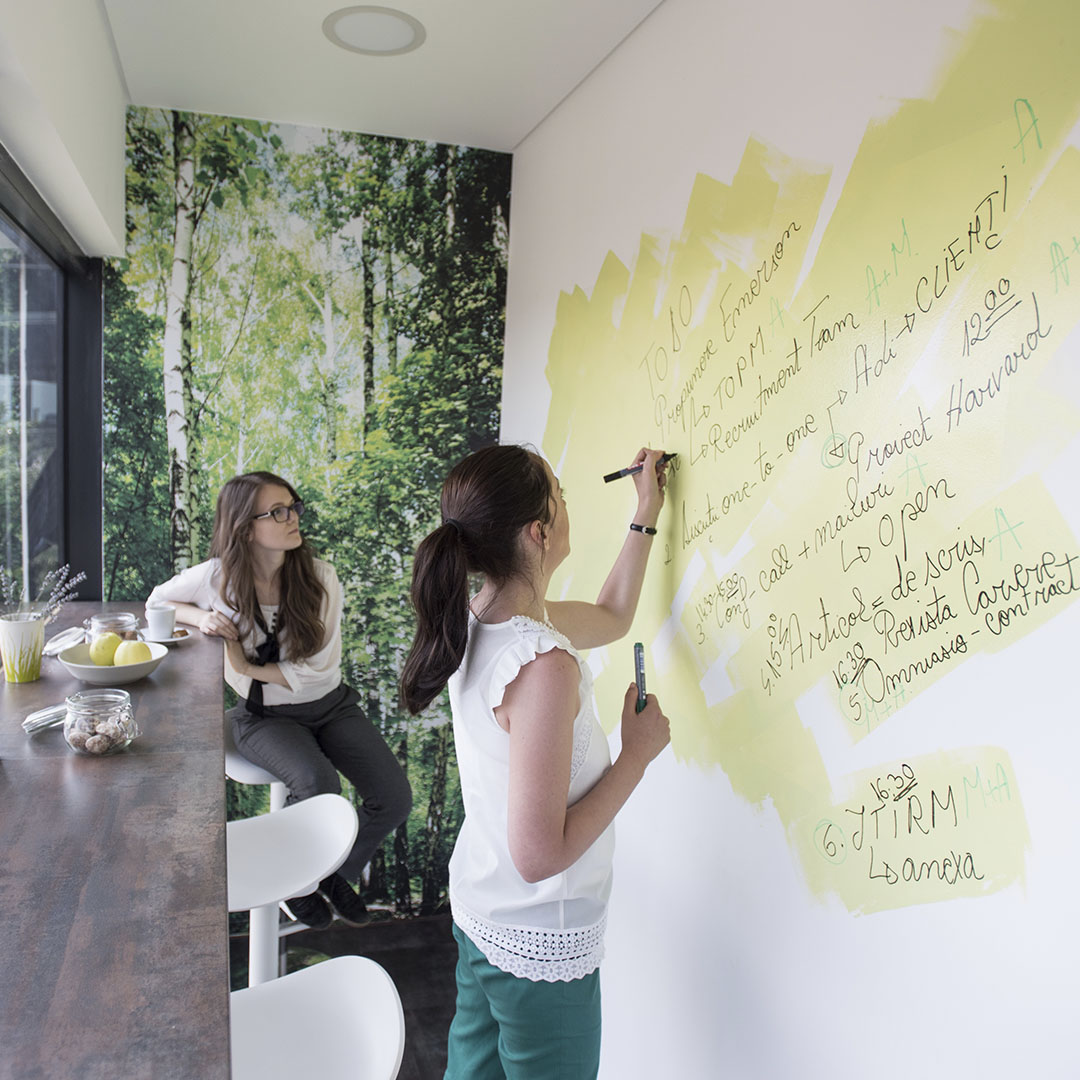
An architectural writable canvas is a high-performance vertical surface integrated directly into an office floor plan—such as walls, structural columns, or mobile furniture panels—engineered to support continuous writing, dry-erase maintenance, and magnetic tool attachments.
Instead of relying on small, isolated presentation boards that limit group participation, this design method transforms standard structural surfaces into functional communication tools. These systems use specialized tempered glass finishes, high-density vinyl layers, or chemical polymers to provide stain-free surfaces that blend cleanly with premium corporate interiors.
Why Fluid Ideation Tools Matter for UAE Hybrid Teams
Deploying agile architectural writing surfaces is a vital strategy for regional companies working to fulfill digital transformation and economic acceleration goals under the Dubai Economic Agenda (D33) and Saudi Vision 2030. As organizations build out flexible, high-density office layouts in prime business hubs like the Dubai International Financial Centre (DIFC) and Riyadh’s Laysen Valley, traditional static meetings are being replaced by fast, iterative project workshops.
According to regional corporate workplace productivity surveys, providing large-scale visual collaboration surfaces reduces alignment errors by keeping key project goals clearly visible. This interactive approach helps multinational corporate groups brainstorm and make decisions quickly, minimizing operational delays.
Technical Parameters for Selecting Writable Surfaces
Selecting the correct write-on system requires assessing three primary functional variables to ensure the chosen material satisfies daily workforce needs.
Spatial Flexibility and Structural Adaptability
Spatial flexibility determines how effectively a write-on product conforms to complex interior shapes or moves across different office zones. While rigid panel boards require large, flat wall sections, advanced materials like dry-erase paints and flexible vinyl rolls can wrap smoothly around circular concrete columns, navigate tight corner angles, or layer onto existing storage enclosures. This material flexibility allows companies to turn underutilized structural areas into functional collaborative spaces.
Text Readability and Contrast Requirements
Maintaining strong visual clarity requires evaluating your specific writing content and the surrounding office lighting. High-contrast white backgrounds—found on classic whiteboards, dry-erase vinyl, and specialized white architectural paint—deliver excellent text readability for intricate structural diagrams, colorful mind maps, and detailed meeting notes. Conversely, clear or colored glass surfaces require careful lighting placement and contrasting backing colors to prevent glare and double-image shadows from obscuring the text.
Lifecycle Cost per Unit Area
Optimizing your corporate real estate budget requires comparing the total surface coverage area against material longevity and installation costs. Prefabricated paneled boards are manufactured in standard, fixed rectangular sizes, which can drive up costs if you want to cover an entire wall. Specialized liquid wall coatings offer seamless, limitless coverage across massive architectural areas, providing a cost-effective solution for large-scale corporate installations.
Material Breakdown: Comparing the Top Write-On Technologies
Choosing the right visual collaboration tool requires evaluating the unique functional features, design styles, and maintenance needs of each material option.
Traditional Whiteboards
Classic whiteboards feature framed, factory-sized configurations that deliver excellent text contrast and reliable erasing performance. However, their distinct industrial borders often disrupt modern interior aesthetics, and their rigid designs do not support flexible layout changes. These systems typically limit participation to a single speaker, making them less effective for dynamic group brainstorming sessions.
Premium Glass Boards
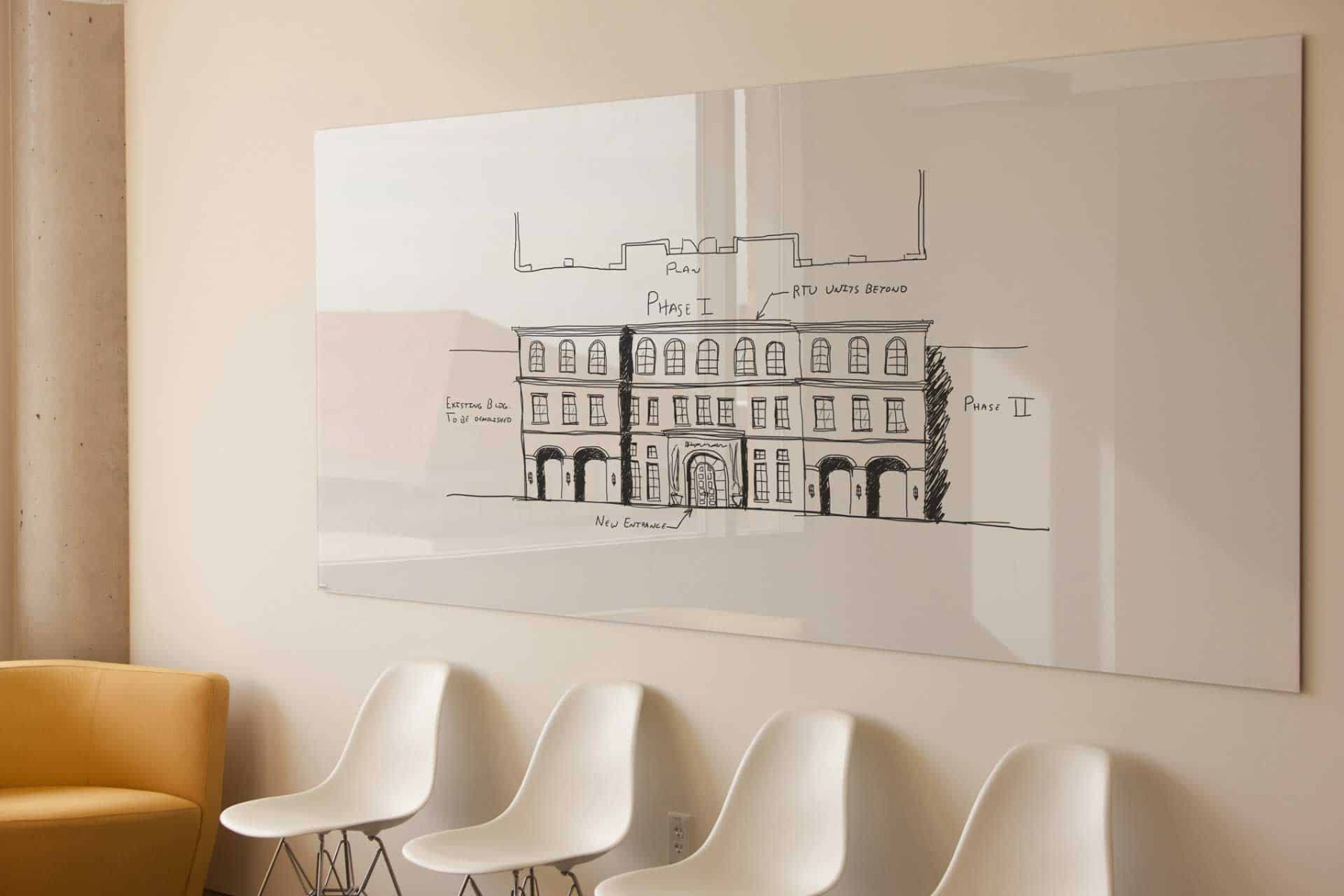
Architectural glass boards—such as premium systems from Clarus—provide a high-end look and excellent durability for corporate interiors. Constructed from ultra-clear, low-iron tempered glass, these frameless panels resist ghosting and staining over decades of use. They can be customized with branded colors or magnetic backings, and their modular designs allow facilities teams to relocate the panels as office needs change.
High-Performance Dry-Erase Paint
Advanced write-on coatings—such as Escreo paint—allow facilities managers to convert standard drywall into an expansive, borderless creative space. Available in high-gloss white, clear, and magnetic variations, this liquid polymer system turns entire rooms into interactive zones. The application cures with a micro-textured surface that provides satisfying pen feedback, though it requires professional installation to prevent surface imperfections.
Flexible Dry-Erase Vinyl
Dry-erase vinyl sheets bridge the gap between paneled boards and liquid coatings. This heavy-duty, commercial-grade film can wrap around curved pillars and custom furniture surfaces. It offers excellent stain resistance and is available with magnetic backings. While vinyl roll lengths are customizable, installing multiple adjacent sheets creates thin vertical seams that must be factored into the design layout.
Agile Mobile Boards and Writable Furniture
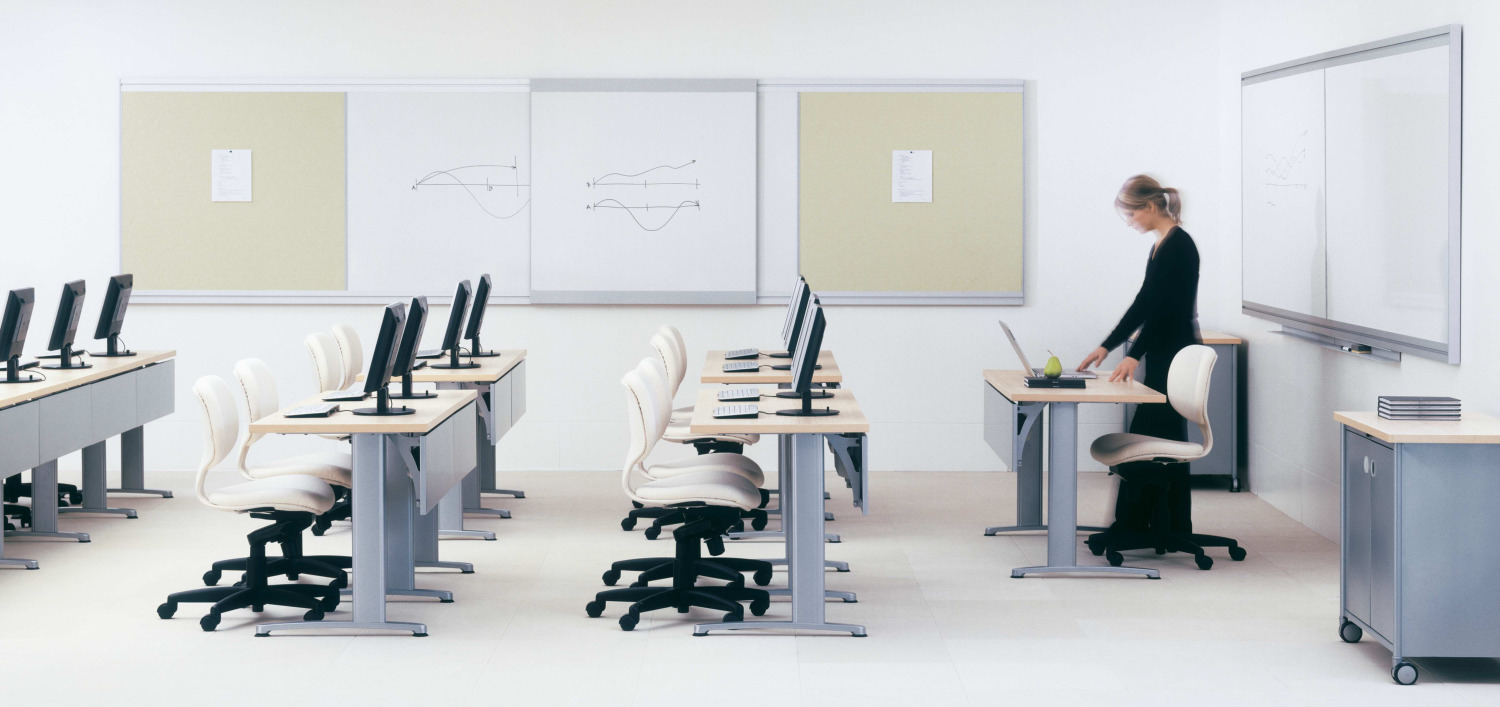
Modern, flexible offices increasingly rely on independent mobile writing panels—such as the Teknion Thesis system—to build temporary project zones on the fly. This focus on adaptability has also driven the development of multi-functional writable furniture. Innovative pieces like the Brunner Lift table combine gas-assist height adjustments with a foldable, dry-erase tabletop, allowing teams to instantly transition from an active standing workshop to a traditional sit-down meeting.
Traditional Presentation Boards vs. Integrated Writable Walls: Which Is Better?
Choosing a visual collaboration strategy requires comparing long-term workspace flexibility against initial installation efforts. Traditional presentation tools utilize small, framed standalone whiteboards on fixed legs or single wall brackets, which limits user participation and creates physical clutter in small meeting rooms.
Conversely, integrated writable walls turn existing architectural surfaces into seamless, full-scale creative tools. While standalone boards require zero specialized installation and have lower upfront costs, they offer limited surface area and restrict group brainstorming.
Integrated writable walls require professional on-site application or architectural mounting, but they maximize room utility and encourage active team collaboration. For organizations running active agile project sprints and cross-functional design workshops, conditional recommendations dictate that if your team routinely relies on large-scale visual tracking or collaborative brainstorming, then integrated writable walls are superior to traditional standalone presentation boards.
Common Pitfalls to Avoid in Writable Wall Specifications
The most frequent error corporate facility planners commit is applying lower-grade dry-erase paints without a proper primer base, resulting in ghosting and permanent ink staining within the first few weeks of use.
Another common pitfall is installing unbacked clear glass boards against heavily patterned wallpaper or near unshielded windows, creating distracting glare that makes notes unreadable.
Finally, many interior teams use harsh, alcohol-based chemical cleaners on specialized dry-erase paint surfaces, which breaks down the outer protective polymer and permanently compromises its erasing capability.
Best Practices for Deploying Architectural Write-On Surfaces
Creating a durable, high-utility collaborative workplace requires a structured, step-by-step material selection process.
-
Map Your Team's Collaboration Flow: Analyze how your staff uses meeting spaces to decide whether your layout needs expansive seamless paint coatings, premium glass accents, or mobile partition boards.
-
Verify Surface Backing Contrast Levels: Ensure all specified glass boards include an opaque, high-contrast backing color to maintain excellent text readability under changing office lighting conditions.
-
Employ Certified Specialized Installers: Contract authorized material professionals to handle the application of dry-erase paints and vinyl wraps to guarantee flat, bubble-free finishes.
-
Establish Correct Product Maintenance Routines: Supply meeting rooms with the exact microfiber erasers and water-based cleaning sprays recommended by the manufacturer to protect the surfaces for long-term use.
Frequently Asked Questions About Writable Walls
Architectural glass boards provide an unbordered look and superior durability. Constructed from premium tempered glass, these panels completely resist ink staining, ghosting, and scratching, outlasting classic whiteboards while blending with modern interior styles.
Yes, high-performance dry-erase paint can be applied seamlessly over rounded concrete pillars, complex architectural curves, and custom partition panels. This liquid application bypasses the size and shape restrictions of traditional rectangular boards.
Ghosting occurs when marker pigment sinks into micro-pores on a surface, leaving a permanent shadow behind. To prevent this, choose premium materials like low-iron tempered glass or commercial-grade dry-erase coatings, and clean them with approved microfiber products.
Magnetic dry-erase vinyl sheets allow a single wall to serve as both a write-on surface and a physical bulletin board. Teams can use magnets to pin up printed design layouts, material color swatches, and agile project cards during brainstorming sessions.
Writable furniture refers to active workspace pieces—such as the Brunner Lift folding table—engineered with durable, dry-erase tabletop surfaces. This design allows employees to jot down quick notes and sketch ideas directly onto their desks during active team discussions.
Clear glass boards can suffer from poor text contrast if the background wall color matches the marker ink or creates double-image shadows. Specifying opaque, solid-color glass panels ensures crisp text readability under diverse corporate lighting setups.
Sources
-
Center for the Built Environment (CBE) Workspace Collaboration and Spatial Analytics
-
ASTM International Standards for Measuring Material Erasability and Stain Resistance
-
The Total Office Architectural Material Specification and Layout Manuals
Relevant